Are Your Liquid Argon Cylinders Costing You?
Are Your Liquid Argon Cylinders Costing You?
Imagine this: It's 2 AM at a semiconductor fabrication plant in Dresden, Germany. Dr. Anna Schmidt, a process engineer, is reviewing the night shift's production report. Her heart sinks. The defect rate on the new 7nm wafer line has spiked again, and the argon consumption is 15% above the weekly target. She knows the culprit: the liquid argon cylinders, a critical but often overlooked component in their high-purity argon supply system. The evaporative losses from aging cylinders and the pressure fluctuations during peak demand are wreaking havoc on their delicate processes. This scenario is all too common across industries relying on liquid argon. The answer to the title's question is a resounding yes—if your cylinders are not optimized for high-purity, high-stability delivery, they are silently draining your profits and compromising quality. In this blog, we'll dissect the hidden costs and explore how advanced cylinder technology from Hebei Runfeng Low Temperature Equipment Co., Ltd. can turn this around.
The Hidden Costs: Three Pain Points That Drain Your Bottom Line
Pain Point 1: Evaporation Losses and Inefficient Refill Cycles
Liquid argon is stored at cryogenic temperatures (around -186°C), and even the best insulated cylinders experience some evaporation. However, inferior insulation or poor cylinder design can lead to evaporation rates as high as 1-2% per day, compared to less than 0.5% for premium cylinders. For a facility consuming 10,000 liters per week, a 1% daily loss means 700 liters wasted per week—enough to fill several cylinders. This translates to direct product loss and increased refill frequency, which not only raises supply costs but also disrupts production schedules. The impact is not just monetary; frequent cylinder changes introduce potential contamination risks and downtime. In industries like electronics manufacturing, where argon purity is critical, even minor losses can affect product yield. The cumulative cost over a year can be staggering, often exceeding hundreds of thousands of dollars for large-scale operations.
Pain Point 2: Pressure Fluctuations and Process Instability
Argon is often used as a shielding gas in welding, a purge gas in semiconductor manufacturing, and a carrier gas in chromatography. These applications demand stable pressure and flow. Traditional liquid argon cylinders with basic regulators can suffer from pressure drops when demand spikes, leading to inconsistent gas delivery. For example, in laser welding of automotive components, a sudden pressure drop can cause porosity in the weld, resulting in rework or scrap. In semiconductor fabs, pressure fluctuations can disrupt plasma etching processes, leading to wafer defects. The root cause is often inadequate pressure control mechanisms and poor thermal management within the cylinder, causing erratic evaporation rates. The consequences include increased scrap rates, production delays, and higher costs for quality control and rework.
Pain Point 3: Safety and Compliance Risks
Liquid argon is a cryogenic liquid that can cause severe cold burns and asphyxiation if leaked in confined spaces. Many legacy cylinders lack advanced safety features such as pressure relief devices that are properly sized, or leak detection systems. Moreover, regulatory bodies like OSHA in the US and PED in Europe impose strict requirements on pressure vessel design, maintenance, and operator training. Non-compliance can result in fines, production stoppages, and reputational damage. For instance, a facility in the UK faced a hefty fine after an incident involving a faulty argon cylinder valve. The cost of retrofitting old cylinders to meet current standards can be prohibitive, making it more economical to invest in modern, compliant cylinders from the outset.
Solutions: How Advanced Cylinder Technology Addresses These Pain Points
Solution for Pain Point 1: High-Performance Insulation and Evaporation Control
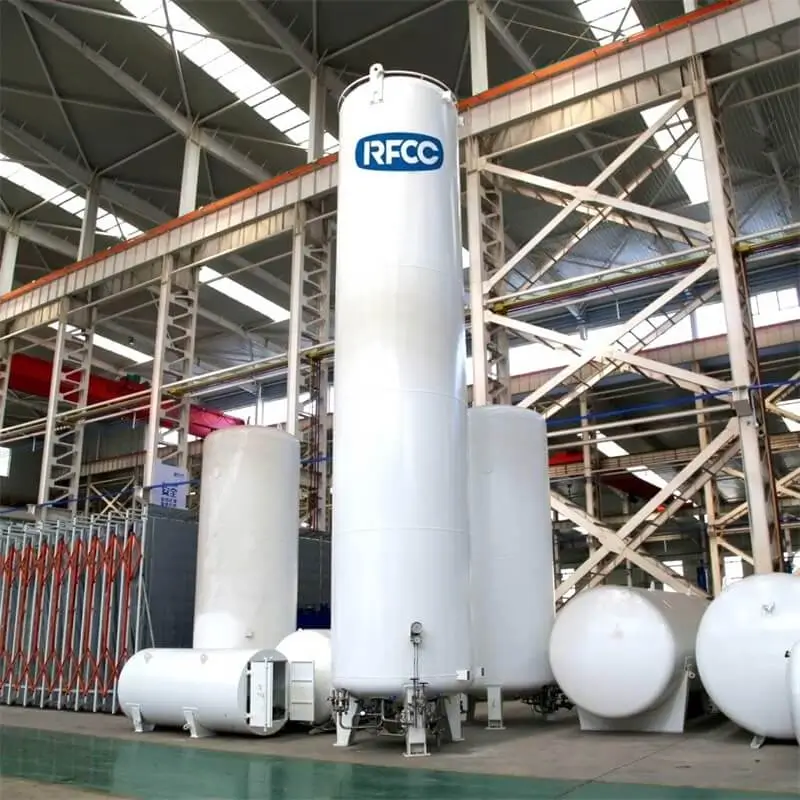
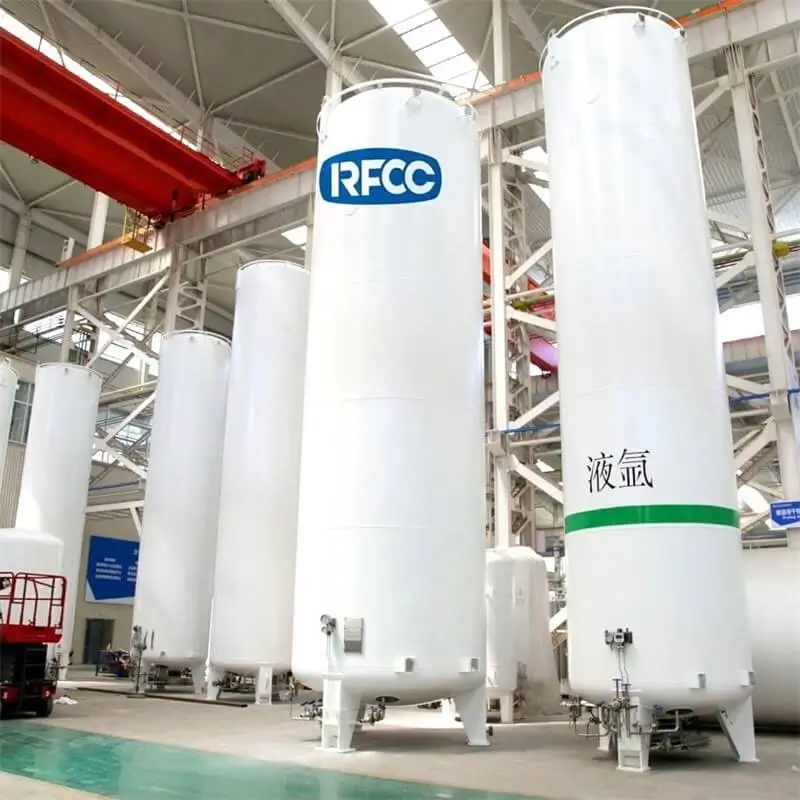
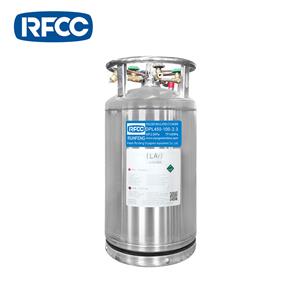
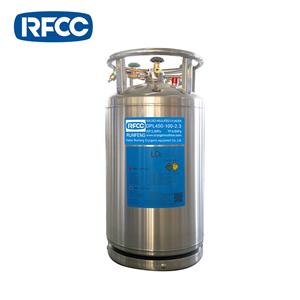
Hebei Runfeng Low Temperature Equipment Co., Ltd. employs multi-layer vacuum insulation with reflective barriers that reduce evaporation losses to as low as 0.3% per day. This is achieved through a combination of high-quality perlite insulation and advanced vacuum technology, ensuring minimal heat ingress. Additionally, our cylinders feature optimized neck tube designs that reduce heat conduction. For a facility consuming 10,000 liters per week, this translates to a savings of over 500 liters per week compared to standard cylinders. Moreover, our cylinders are equipped with economizer circuits that utilize the cold gas from the evaporating liquid to subcool the remaining liquid, further reducing losses. The result is fewer refills, lower supply costs, and reduced downtime.
Solution for Pain Point 2: Precision Pressure Control and Stable Delivery
To combat pressure fluctuations, our cylinders integrate advanced pressure build-up and economizer systems with precise regulators. The pressure build-up coil ensures rapid pressurization when needed, while the economizer maintains stable pressure during periods of low demand. Our cylinders also include a dual-stage pressure regulator that maintains outlet pressure within ±1% of setpoint, even under varying flow rates. For critical applications, we offer cylinders with integrated buffer tanks and electronic pressure control that can adjust to demand changes in real-time. This level of control ensures that processes receive a consistent gas supply, reducing defects and improving yield. In welding applications, this means consistent weld quality; in semiconductor manufacturing, it means stable etch rates and fewer wafer defects.
Solution for Pain Point 3: Enhanced Safety Features and Compliance
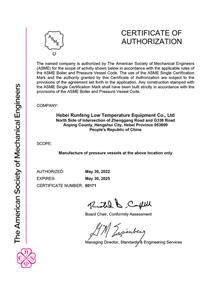
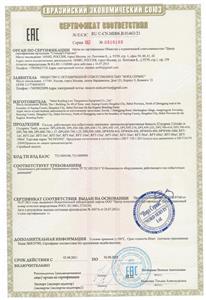
Safety is paramount in our design philosophy. Our cylinders are equipped with multiple safety features: pressure relief valves that are sized and certified according to ASME or PED requirements, rupture discs as secondary relief, and robust valve protection. We also offer optional leak detection sensors and remote monitoring systems that alert operators to any anomalies. All our cylinders are designed, manufactured, and tested in accordance with ISO 9001 and relevant pressure vessel codes, ensuring compliance with global standards. We provide comprehensive documentation and support for regulatory audits. By choosing our cylinders, you not only mitigate safety risks but also avoid potential fines and downtime associated with non-compliance.
Customer Success Stories: Real Results from Real Facilities
Case Study 1: Semiconductor Fabrication in Dresden, Germany
Dr. Anna Schmidt's facility, a leading semiconductor fab, was struggling with argon purity and pressure stability. After switching to Hebei Runfeng's liquid argon cylinders, they observed a 30% reduction in argon consumption and a 15% improvement in wafer yield. "The stability of the argon supply has been a game-changer for our 7nm line," says Dr. Schmidt. "We've not only saved on gas costs but also significantly reduced defect rates." The facility now uses our cylinders across all production lines.
Case Study 2: Aerospace Welding in Seattle, USA
Precision Aero Components, a aerospace supplier, faced frequent weld defects due to pressure fluctuations. They installed our cylinders with integrated pressure control and saw a 25% reduction in scrap rates and a 20% increase in throughput. "The consistent pressure means our welders can focus on quality, not adjusting regulators," remarks John Miller, Production Manager. "We've also cut our argon refills by 20% thanks to lower evaporation losses."
Case Study 3: Metal Fabrication in Manchester, UK
British Metalworks, a large fabrication shop, was concerned about safety compliance and high argon costs. After adopting our cylinders, they achieved full compliance with PED and reduced argon expenses by 18%. "The safety features give us peace of mind, and the savings go straight to our bottom line," says Sarah Thompson, Operations Director. "The remote monitoring system is a bonus—we can track usage and pressure from the office."
Case Study 4: Research Laboratory in Tokyo, Japan
A prestigious research institute required ultra-high purity argon for their analytical instruments. Our cylinders with electropolished inner surfaces and advanced purification media delivered purity levels of 99.9999%, exceeding their requirements. "The reproducibility of our experiments improved dramatically," notes Dr. Kenji Tanaka. "We no longer worry about gas impurities skewing our results."
Applications and Partnerships: Trusted Across Industries
Liquid argon cylinders from Hebei Runfeng are used in a wide range of applications, including:
- Semiconductor manufacturing: for purge, carrier, and shielding gases
- Welding and metal fabrication: as shielding gas for TIG and MIG welding
- Food and beverage: for modified atmosphere packaging
- Pharmaceutical: for blanketing and inerting
- Research and development: for analytical instruments and glove boxes
We are proud to partner with leading companies worldwide. For instance, we supply cylinders to a major automotive manufacturer in Germany for their laser welding lines, and to a top-tier semiconductor equipment maker in the US for their process chambers. Our collaborations extend to distributors and OEMs who integrate our cylinders into their gas supply systems. These partnerships are built on our commitment to quality, reliability, and technical support. By choosing Hebei Runfeng, you join a network of forward-thinking organizations that prioritize efficiency and safety.
Frequently Asked Questions
1. What is the typical evaporation rate of your liquid argon cylinders, and how does it compare to standard cylinders?
Our cylinders achieve evaporation rates as low as 0.3% per day under normal usage, thanks to multi-layer vacuum insulation and optimized neck design. Standard cylinders often have rates of 1-2% per day. This difference can result in significant cost savings over time, especially for high-consumption facilities.
2. Can your cylinders be integrated with existing gas supply systems and monitoring software?
Yes, our cylinders are designed for compatibility with standard CGA/DIN fittings and can be integrated with most gas supply systems. We also offer optional IoT-enabled pressure and level sensors that can transmit data to your SCADA or building management system via Modbus or Ethernet, allowing real-time monitoring and predictive maintenance.
3. What safety certifications do your cylinders carry?
Our cylinders are designed and manufactured according to ASME Section VIII Div.1, PED 2014/68/EU, and ISO 9001. They come with pressure relief valves certified to ISO 4126 and can be supplied with material certificates and third-party inspection reports as required.
4. How do you ensure argon purity in your cylinders?
We use electropolished stainless steel inner vessels and high-purity valve components. Before filling, each cylinder undergoes rigorous cleaning and purging with ultra-high purity argon. We can provide certificates of analysis for purity levels up to 99.9999% (6N) upon request.
5. What is the lead time for custom cylinder orders, and do you provide after-sales support?
Lead times vary based on specifications and order volume, typically 8-12 weeks for custom orders. We provide comprehensive after-sales support, including installation guidance, maintenance training, and a 2-year warranty on major components. Our global service network ensures timely assistance.
Conclusion: Don't Let Your Cylinders Cost You
Your liquid argon cylinders are more than just containers—they are critical components that impact your operational efficiency, product quality, and safety. By choosing advanced cylinders from Hebei Runfeng Low Temperature Equipment Co., Ltd., you can reduce evaporation losses, ensure stable pressure, and meet regulatory requirements. Our customer success stories demonstrate tangible improvements in cost and quality. Don't let outdated cylinders drain your profits. Take action today: download our technical whitepaper on optimizing liquid argon supply, or contact our sales engineers for a personalized consultation. Visit our website or reach out to us to learn how we can help you achieve operational excellence.