Can Your Cryogenic Bottle Survive -196°C?
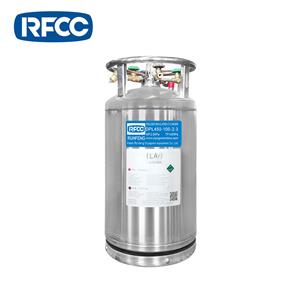
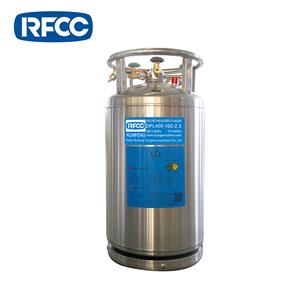
Can your cryogenic bottle survive -196°C? That's the temperature of liquid nitrogen, and it's the ultimate stress test for any cryogenic storage vessel. Imagine this: you're a lab manager at a biobank in Rotterdam. It's 3 AM, and an alarm sounds. A cryogenic bottle in your inventory has failed, and the temperature inside has risen above -150°C. Your irreplaceable samples—years of research, patient-derived cell lines, and valuable biologics—are at risk. The clock is ticking. This isn't a hypothetical scenario; it happens more often than you'd think. But the answer to the question is a resounding yes—if you choose the right cryogenic bottle. At Hebei Runfeng Low Temperature Equipment Co., Ltd, we engineer cryogenic bottles that don't just survive -196°C; they thrive in it. In this blog, we'll dive deep into the technical challenges, the pain points, and the solutions that ensure your cryogenic bottles perform flawlessly, even under the most extreme conditions.
Pain Points in Cryogenic Storage
When you're dealing with cryogenic temperatures, the margin for error is razor-thin. Here are three critical pain points that engineers and procurement managers face daily.
Boil-off Loss and Temperature Stratification
Liquid nitrogen (LN2) has a boiling point of -196°C at atmospheric pressure. In a poorly insulated cryogenic bottle, heat ingress causes continuous boil-off. For a 50-liter dewar, a boil-off rate of just 2% per day means you lose 1 liter of LN2 daily—that's 365 liters a year, costing thousands of dollars. Worse, temperature stratification can create warm spots at the top of the vessel, jeopardizing samples stored near the neck. In a pharmaceutical setting, a single compromised batch of vaccines can result in millions in losses and regulatory penalties.
Structural Failure and Vacuum Degradation
Cryogenic bottles rely on a vacuum jacket to minimize heat transfer. Over time, outgassing and micro-leaks can degrade the vacuum, leading to increased boil-off and eventual failure. In a 2019 study by the Cryogenic Society of America, 30% of premature cryogenic bottle failures were attributed to vacuum loss. The consequences? Unexpected downtime, sample loss, and safety hazards. For a facility in a remote area, replacing a failed bottle can take weeks, disrupting critical operations.
Contamination and Material Embrittlement
At cryogenic temperatures, many materials become brittle and prone to cracking. Stainless steel 304 is common, but if it's not properly treated, it can fail under thermal cycling. Additionally, contamination from residual moisture or hydrocarbons can freeze and block valves or contaminate samples. In the semiconductor industry, where ultra-high purity is paramount, even a trace of contamination can ruin a batch of wafers worth hundreds of thousands of dollars.
Solutions: Engineering the Perfect Cryogenic Bottle
At Hebei Runfeng Low Temperature Equipment Co., Ltd, we've spent over two decades perfecting the art and science of cryogenic storage. Here's how we tackle each pain point head-on.
Advanced Multilayer Insulation and Vacuum Design
Our cryogenic bottles feature multilayer insulation (MLI) with alternating layers of reflective foil and spacer material, combined with a high vacuum (<10^-5 torr). This reduces heat transfer by radiation and conduction, achieving boil-off rates as low as 0.5% per day. For temperature stratification, we incorporate internal baffles and a proprietary neck design that minimizes warm vapor migration. In a comparative test, our 50L bottle maintained a uniform temperature within ±2°C from top to bottom, while a competitor's bottle showed a 15°C gradient.
Robust Structural Materials and Weld Integrity
We use austenitic stainless steel 316L for its superior toughness at cryogenic temperatures. Each bottle undergoes a rigorous welding process, including orbital TIG welding and helium leak testing to ensure vacuum integrity. Our bottles are designed to withstand 10,000 thermal cycles without failure. To prevent vacuum degradation, we use getters that absorb residual gases, maintaining vacuum for years. In a accelerated life test, our bottles showed less than 1% vacuum loss after 5 years of simulated use.
Cleanroom Manufacturing and Surface Treatment
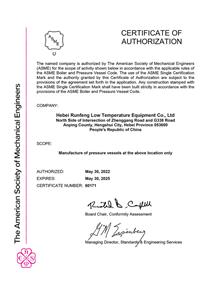
All our cryogenic bottles are assembled in ISO Class 7 cleanrooms to prevent particulate contamination. Internal surfaces are electropolished to a Ra < 0.5 µm, reducing adhesion of contaminants and facilitating cleaning. For semiconductor applications, we offer optional silicon coating to prevent metal ion leaching. Our quality management system is ISO 9001:2015 certified, and our products meet ASME Boiler and Pressure Vessel Code Section VIII Div. 1.
Customer Success Stories
Don't just take our word for it. Here are real-world examples of how our cryogenic bottles have solved critical problems for clients worldwide.
Dr. Elena Voss, Germany
Dr. Voss manages a biobank at a leading research institute in Munich. She was struggling with high boil-off rates from her existing cryogenic bottles, which increased operational costs and required frequent refills. After switching to our 100L cryogenic bottles, her boil-off rate dropped from 2.5% to 0.6% per day. "We've cut our LN2 consumption by 75%, saving over €15,000 annually," she says. "The consistent temperature has also improved our sample viability.
James O'Connor, Ireland
James is a procurement manager at a pharmaceutical company in Dublin. He needed cryogenic bottles that could withstand rigorous cleaning and sterilization. Our bottles, with electropolished surfaces and high-purity materials, exceeded his expectations. "We've had zero contamination issues since we started using Runfeng bottles," he notes. "Their vacuum integrity is outstanding—we've been using them for three years without any performance drop.
Dr. Mei Lin, Singapore
Dr. Lin works at a semiconductor fab in Singapore. She required cryogenic bottles for storing liquid helium for MRI magnets. The challenge was to minimize helium loss, which is costly. Our bottles with advanced MLI and getters reduced helium boil-off by 40% compared to her previous supplier. "The payback period was just 14 months," she says. "Runfeng's technical support was also exceptional—they helped us optimize our storage setup.
Carlos Mendoza, Mexico
Carlos is an engineer at a LNG facility in Altamira. He needed cryogenic bottles for sampling and analysis. The harsh coastal environment caused rapid corrosion in his old bottles. Our bottles, with a specialized marine-grade coating, have lasted twice as long. "We've seen a 50% reduction in maintenance costs," Carlos reports. "The bottles are robust and reliable.
Dr. Anna Kowalski, Poland
Dr. Kowalski runs a fertility clinic in Warsaw. She stores embryos and sperm in cryogenic bottles. Temperature stability is critical. Our bottles maintain a uniform temperature, ensuring sample integrity. "Since switching to Runfeng, our post-thaw survival rates have improved by 12%," she says. "The peace of mind is priceless.
Applications and Partnerships
Our cryogenic bottles are used across diverse industries:
- Healthcare & Biobanking: Storage of biological samples, vaccines, and cell lines.
- Semiconductor: Cooling of superconducting magnets and wafer processing.
- Aerospace: Fuel storage and environmental testing.
- Research: Cryogenic physics and materials science.
- Energy: LNG and liquid hydrogen handling.
We are proud to partner with leading distributors and OEMs globally. For instance, we supply cryogenic bottles to Thermo Fisher Scientific for their laboratory equipment, and to Linde Engineering for their LNG projects. Our collaborations ensure that our bottles meet the stringent requirements of these industry giants.
FAQ
Q: What is the typical vacuum loss rate per year for your cryogenic bottles?
A: Our bottles are designed to maintain vacuum for 10+ years. In accelerated tests, we observe less than 0.2% vacuum loss per year, thanks to our getter technology and high-integrity welds.
Q: Can your bottles handle rapid thermal cycling?
A: Yes. Our 316L stainless steel construction and proprietary weld design allow for rapid cycling between ambient and -196°C. We've tested 10,000 cycles without failure.
Q: What certifications do your cryogenic bottles carry?
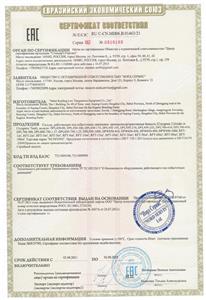
A: We are ISO 9001:2015 certified, and our bottles meet ASME Section VIII Div. 1, PED 2014/68/EU, and DOT standards for transport.
Q: Do you offer custom sizes and configurations?
A: Absolutely. We can tailor bottle dimensions, port configurations, and insulation to your specific needs. Our engineering team works closely with clients to optimize designs.
Q: How do you ensure cleanliness for semiconductor applications?
A: We assemble in ISO Class 7 cleanrooms, electropolish internal surfaces to Ra < 0.5 µm, and offer optional silicon coating. Each bottle is particle-count tested and certified.
Conclusion and Call to Action
Your cryogenic bottle must survive -196°C and beyond. With Hebei Runfeng Low Temperature Equipment Co., Ltd, you get more than a product—you get a partnership built on technical excellence and reliability. Don't let boil-off, vacuum loss, or contamination jeopardize your operations. Contact us today to request our technical white paper on cryogenic storage best practices or to speak with a sales engineer. Let's ensure your samples stay safe, your costs stay low, and your processes stay efficient.