Cryogenic Tank Cooldown and Purging: Key Requirements for First Use
Cryogenic Tank Cooldown and Purging: Operational Requirements for Safe First Use
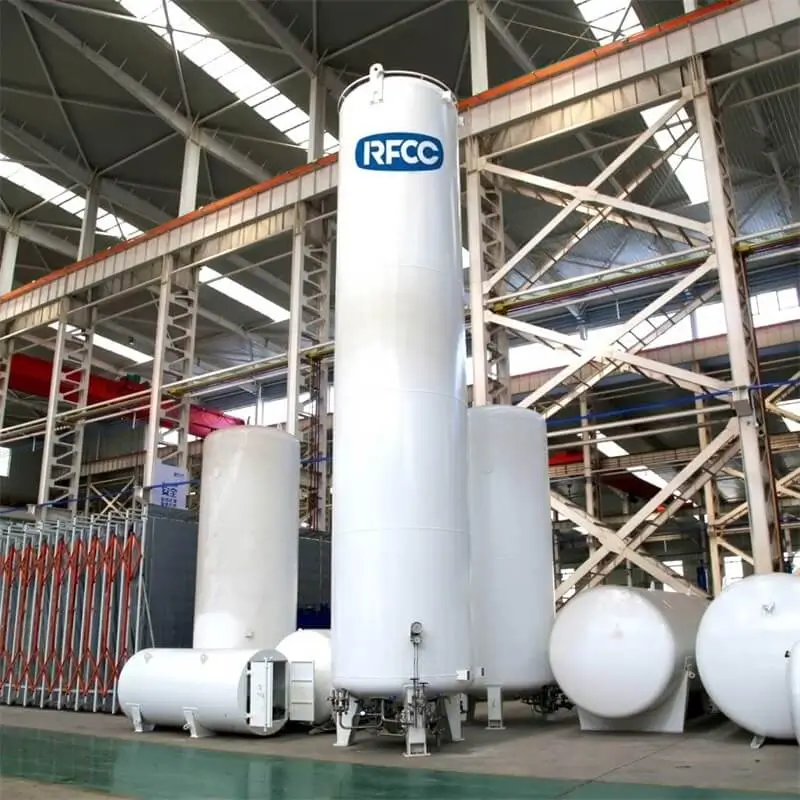
The first commissioning of a cryogenic storage tank is an important step that requires proper cooldown and purity displacement procedures. A newly manufactured cryogenic tank contains a relatively warm inner vessel, and directly filling it with cryogenic liquid without proper preparation may result in rapid pressure rise during the initial filling process.
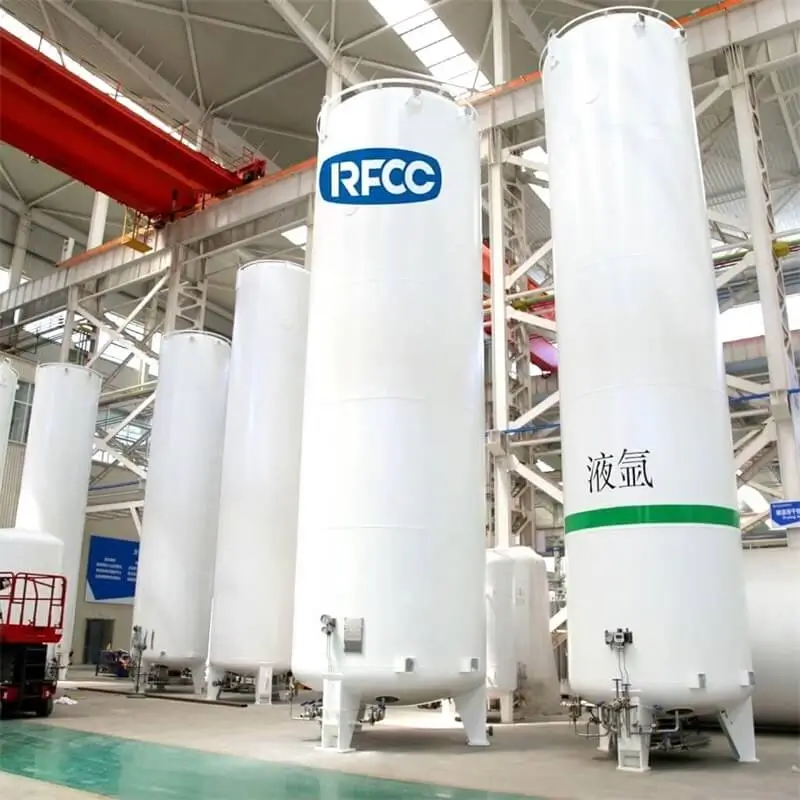
For oxygen, nitrogen, and argon cryogenic storage tanks, the first-use procedure should include both tank cooldown and purity displacement. The process is designed to gradually remove heat from the inner vessel while bringing the internal gas purity to the required level.
What Is Cryogenic Tank Cooldown?
Cryogenic tank cooldown is the process of removing heat from the inner vessel before normal cryogenic liquid storage begins.
When a new cryogenic tank is first put into service, the inner vessel is at a relatively high temperature. When cryogenic liquid enters the tank, the large temperature difference causes significant heat exchange. If the heat is not adequately removed during the initial cooldown process, the tank may experience a rapid pressure increase after the first filling.
Therefore, the initial cooldown process is an essential part of commissioning a cryogenic storage tank.
Why Is Purity Displacement Necessary?
In addition to cooling the tank, the gas inside the inner vessel needs to be displaced to achieve the required purity.
The cooldown and purity displacement process for oxygen, nitrogen, and argon tanks uses cryogenic liquid introduced through the top filling line. For horizontal cryogenic tanks, the openings of the top filling spray pipe should be oriented upward and at approximately 45° to the left and right rather than downward.
The number of cooldown and displacement cycles depends on the required gas purity:
·
For general cooldown requirements: at least 3 cycles
·
·
For gas purity of 99.9% or higher: at least 4 cycles
·
·
For gas purity of 99.99% or higher: 6–7 cycles may be required
·
The purity of the cryogenic liquid used for the operation is also an important prerequisite for achieving the required final gas purity.
Cryogenic Tank Cooldown and Purity Displacement Procedure
The basic procedure consists of introducing a certain amount of cryogenic liquid into the inner vessel through the top filling system, maintaining the liquid for a specified period, and then releasing the pressure from the inner vessel.
This process is repeated according to the required number of cycles and the size of the cryogenic tank.
After the required number of cycles has been completed, the gas purity should be checked at the vent outlet using a gas purity analyzer to confirm whether the required purity level has been reached.
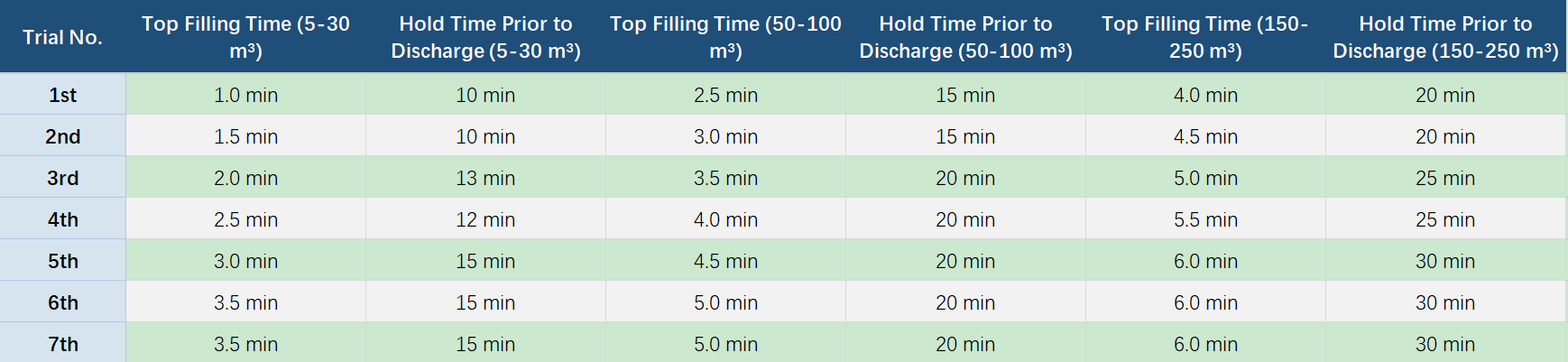
For example, for tanks in the 5–30 m³ range, the first cycle requires approximately 1 minute of top filling followed by 10 minutes of holding. The filling and holding times increase progressively with subsequent cycles.
For tanks from 50–100 m³ and 150–250 m³, the corresponding filling and holding times are also specified according to tank capacity and cycle number.
The actual operating procedure should follow the applicable tank capacity and the corresponding commissioning requirements.
LNG Cryogenic Tank Cooldown and Purging
LNG storage tanks require a different approach during initial cooldown and displacement.
According to the operating requirements, liquid nitrogen is recommended for the initial cooldown of LNG tanks.
There are several reasons for using liquid nitrogen. First, liquid nitrogen is relatively economical for this application. Second, it can reduce the temperature of the inner tank to a cryogenic state within a relatively short period. Third, the gas generated during heat exchange can be safely vented.
Using LNG directly for initial cooldown can be less economical, while the large amount of gas generated during heat exchange creates additional safety concerns because natural gas can burn when exposed to an ignition source.
Oxygen Control During LNG Tank Purging
For LNG storage tanks, the purpose of the displacement process is to reduce the oxygen concentration inside the inner vessel.
The provided operating requirements specify that the oxygen content should be reduced to no more than 3% before proceeding with the relevant commissioning process.
This is particularly important because oxygen and natural gas can form a combustible mixture at certain concentrations. Therefore, oxygen concentration control is a key consideration during LNG tank preparation.
Why Top Filling Is Important
During the cooldown and displacement process, the LNG tank should use the top filling line for liquid nitrogen introduction throughout the process.
The process should continue until the oxygen concentration reaches the required level. When the fourth measurement reaches the specified requirement, the remaining liquid nitrogen can be introduced into the tank through the top filling line. If the oxygen concentration does not meet the requirement, the cooldown and displacement process should continue until the target is achieved.
Recommended Liquid Nitrogen Usage for LNG Tank Cooldown
The operating requirements recommend that the amount of liquid nitrogen used for LNG tank cooldown should generally be:
5%–8% of the tank's nominal volume.
Excessive liquid nitrogen usage should be avoided because it may affect the heating value of the LNG
Cryogenic Tank Manufacturer and Commissioning Support
Proper cooldown and purity displacement are important parts of the initial commissioning of cryogenic storage tanks.
A well-designed cryogenic tank should provide an appropriate top filling system and internal spray arrangement to support the required cooldown and displacement process. For different tank capacities and applications, the commissioning procedure should be established according to the tank design, operating requirements, required purity, and applicable project conditions.
As a professional cryogenic equipment manufacturer, Hebei Runfeng Cryogenic Equipment Co., Ltd. provides cryogenic storage tanks and related cryogenic equipment for industrial gas and other applications.
Conclusion
Cryogenic tank cooldown and purity displacement are essential procedures when commissioning a new cryogenic storage tank.
For oxygen, nitrogen, and argon tanks, the process combines top filling, cooldown, pressure release, repeated displacement cycles, and final gas purity verification. For LNG tanks, liquid nitrogen can be used for initial cooldown, while oxygen concentration must be controlled before the tank is put into service.
Understanding these procedures helps operators better prepare cryogenic tanks for their first filling and supports safer and more reliable operation.
Keywords: cryogenic tank cooldown, cryogenic tank purging, cryogenic tank commissioning, cryogenic storage tank, liquid nitrogen tank, liquid oxygen tank, liquid argon tank, LNG storage tank, cryogenic tank manufacturer