The Important Role of Liquid Oxygen Storage Tanks in Modern Industry
The Important Role of Liquid Oxygen Storage Tanks in Modern Industry
Why are more and more enterprises choosing liquid oxygen storage tanks to meet their gas supply needs?
With the rapid development of sectors such as chemical production, medical oxygen supply, environmental treatment, and new energy, oxygen has become an indispensable resource in modern industrial production. For enterprises requiring a continuous, high-volume oxygen supply, liquid oxygen storage tanks are increasingly replacing traditional high-pressure steel cylinders, offering a safer, more efficient, and cost-effective gas supply solution.
As a professional manufacturer of cryogenic storage and transport equipment, RFCC (Hebei Runfeng Cryogenic Equipment Co., Ltd.) is dedicated to providing global customers with high-quality liquid oxygen storage tanks, cryogenic storage tanks, and cryogenic gas supply system solutions, helping enterprises achieve stable gas supply while reducing costs and enhancing efficiency.
What is a liquid oxygen storage tank?
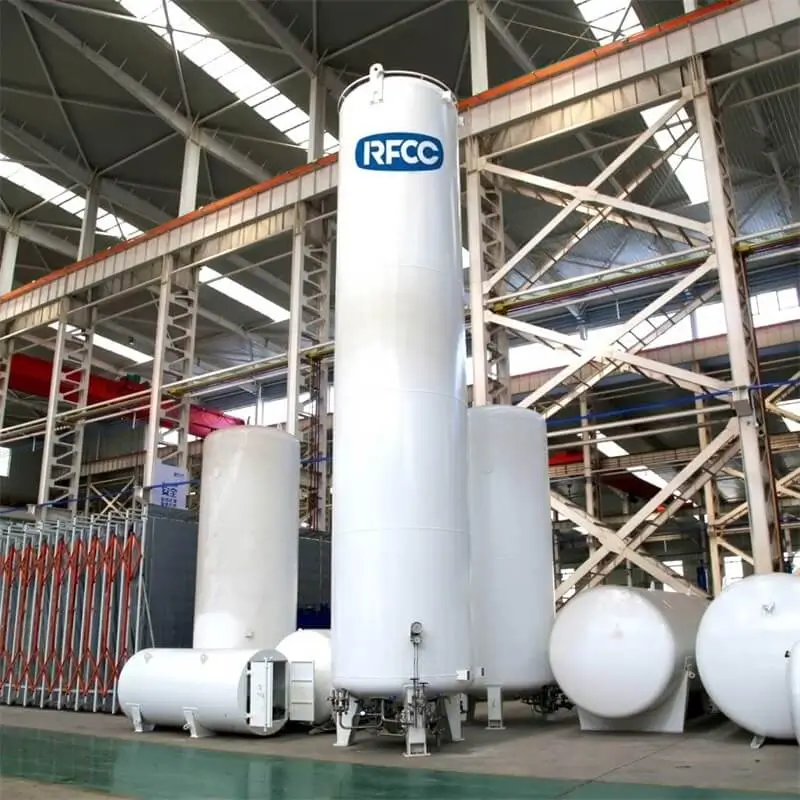
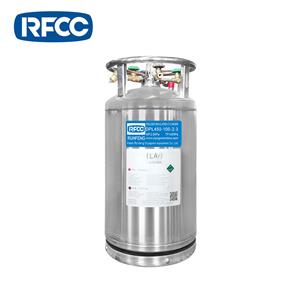
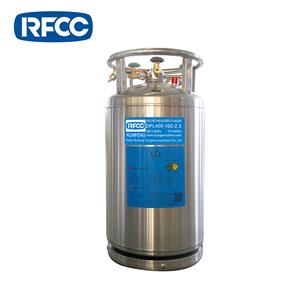
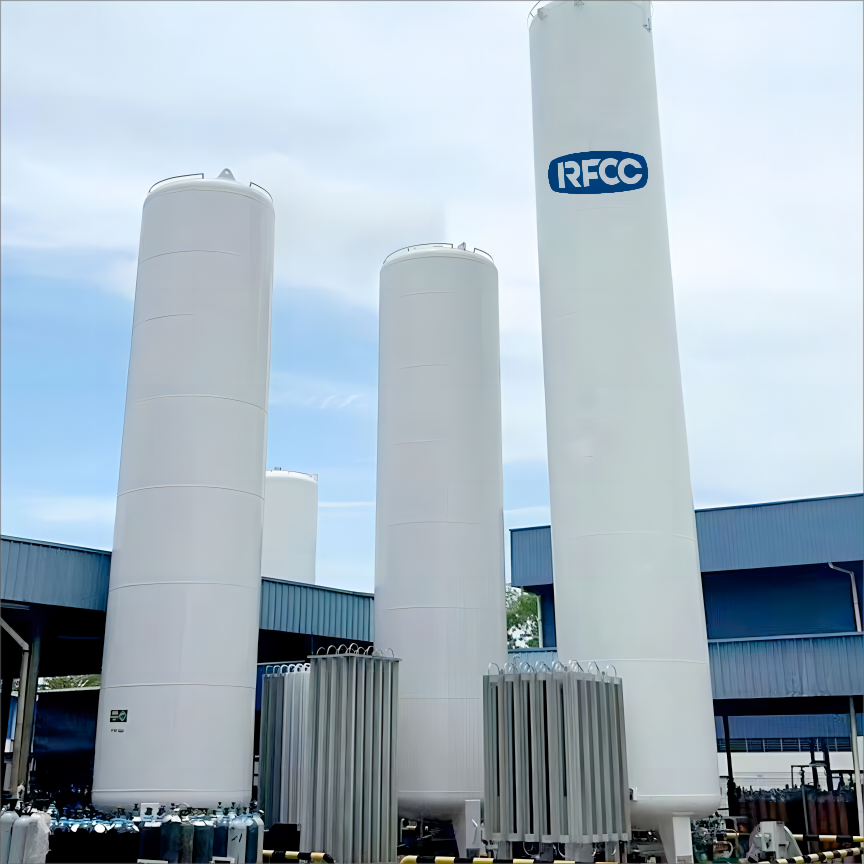
A liquid oxygen storage tank is a cryogenic pressure vessel specifically designed to store liquid oxygen (LO₂).
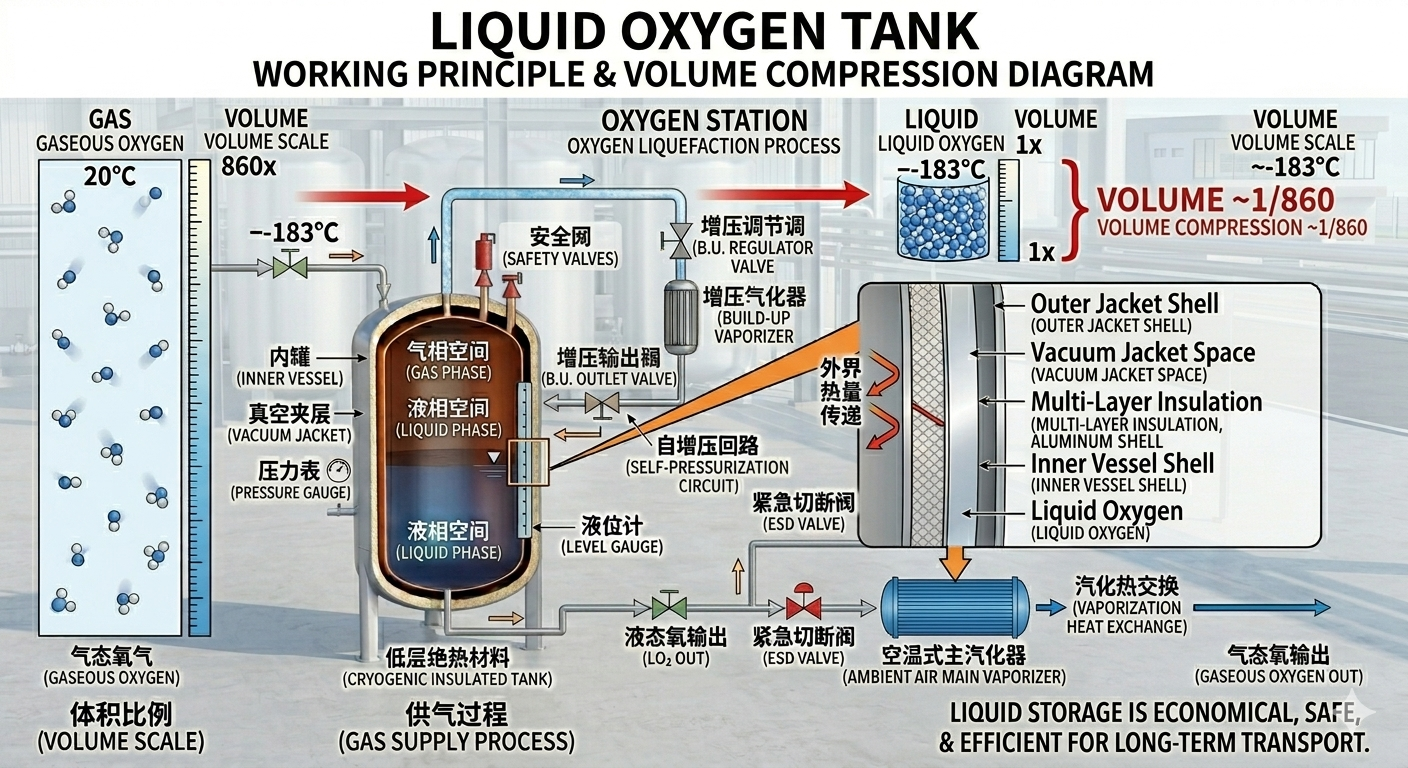
Oxygen liquefies at a low temperature of approximately -183°C; the volume of the liquefied oxygen is only about 1/860th that of gaseous oxygen, allowing for the storage of large quantities within a limited space. These tanks utilize a high-vacuum, multi-layer insulation structure to effectively minimize heat transfer from the outside, ensuring the stable, long-term storage of liquid oxygen.
Compared to traditional oxygen cylinders, liquid oxygen storage tanks offer advantages such as high storage capacity, efficient transport, and stable gas supply, making them widely used across various industrial sectors.
How does a liquid oxygen storage tank work?
A liquid oxygen storage tank primarily consists of an inner vessel, an outer shell, a vacuum interlayer, and a pressurization system.
Liquid Oxygen Storage
Liquid oxygen is stored in cryogenic insulated containers, maintaining a stable, low-temperature state.
Pressure Control
The storage tank is equipped with an automatic pressure-building system and safety protection devices to ensure stable internal pressure.
Liquid Vaporization
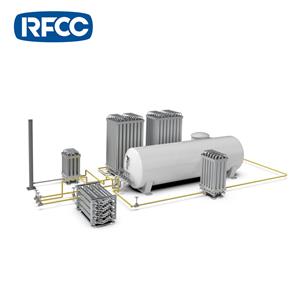
When the user requires oxygen, liquid oxygen is converted into oxygen gas via an ambient air vaporizer or a steam vaporizer.
Pipeline Transmission
The vaporized oxygen is transported via pipelines to production equipment or points of use, ensuring a continuous and stable supply.
Major industrial applications of liquid oxygen storage tanks
1.Chemical and Petrochemical Industries: In chemical production processes, oxygen is widely used in oxidation reactions, syngas production, coal-to-chemicals, petroleum refining, and catalytic processes; a stable oxygen supply can effectively enhance reaction efficiency and product quality.
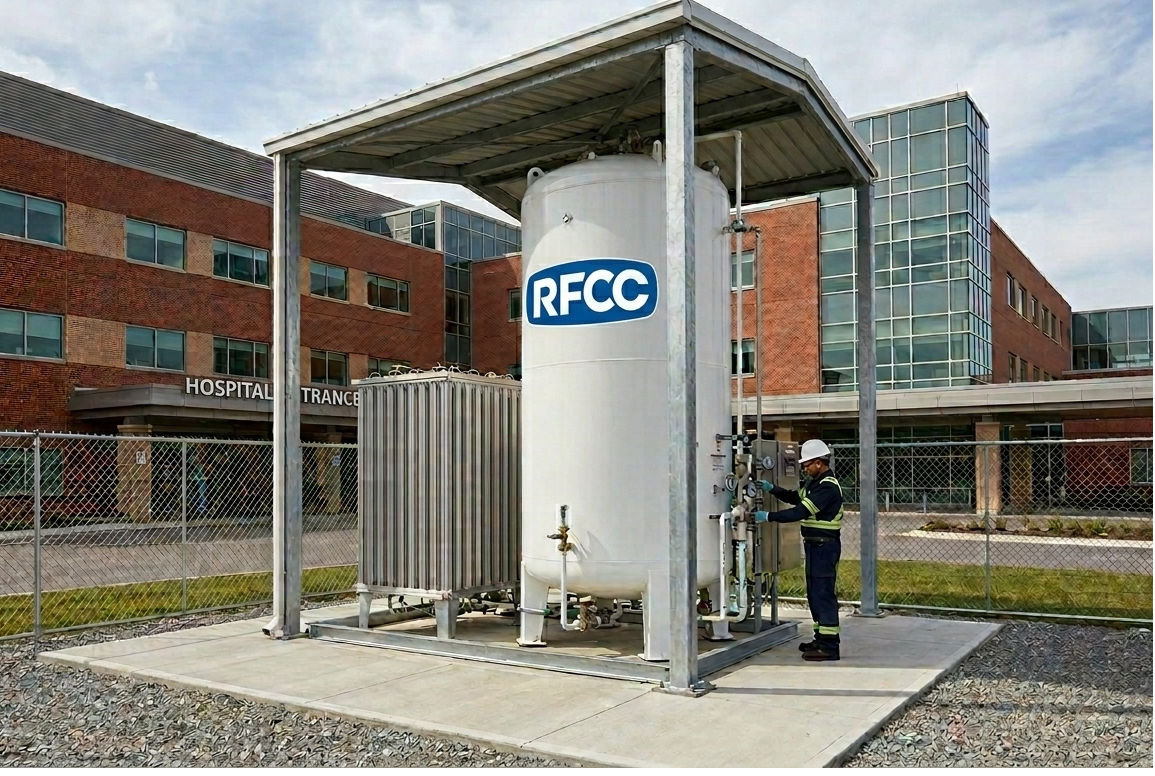
2.Medical Oxygen Supply Systems: Hospitals and medical centers typically utilize liquid oxygen storage tanks as part of their centralized oxygen supply systems. The liquid oxygen is vaporized and distributed to patient wards, operating rooms, and ICUs, providing a continuous and stable supply of medical-grade oxygen. Characterized by high storage capacity and infrequent replenishment requirements, this method serves as a vital oxygen supply solution for large medical institutions.
3.Aerospace sector: Liquid oxygen is not merely an industrial gas but also a crucial oxidizer for rocket propellants.In space launch systems, liquid oxygen combines with fuels such as liquid hydrogen or kerosene to generate powerful thrust.
Why choose a liquid oxygen storage tank?
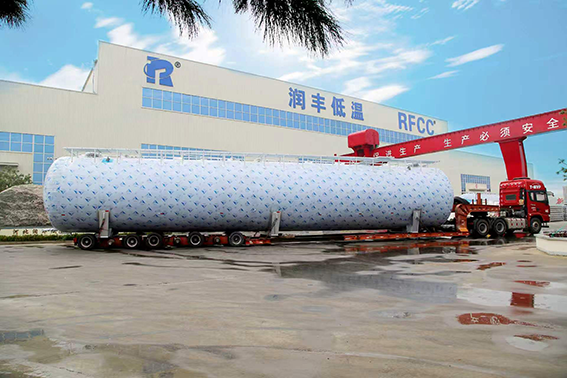
It offers higher storage efficiency; since the volume of liquid oxygen is far smaller than that of gaseous oxygen, storage space requirements are significantly reduced. It lowers operating costs; compared to frequently replacing oxygen cylinders, liquid oxygen tanks enable centralized storage and long-term supply, thereby cutting transportation and labor expenses. It ensures a continuous, stable gas supply, making it ideal for enterprises with 24-hour production cycles by preventing downtime caused by cylinder changes. Furthermore, it is safe and reliable; RFCC liquid oxygen tanks are equipped with comprehensive safety valves, pressure control systems, and monitoring devices to ensure stable, long-term operation.
RFCC Storage Tank Solutions
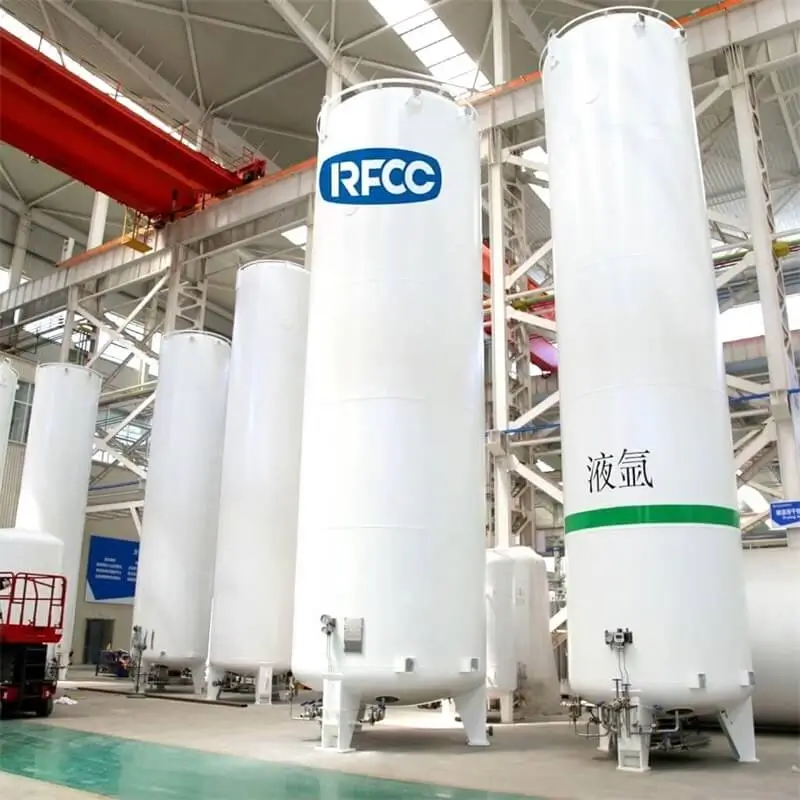
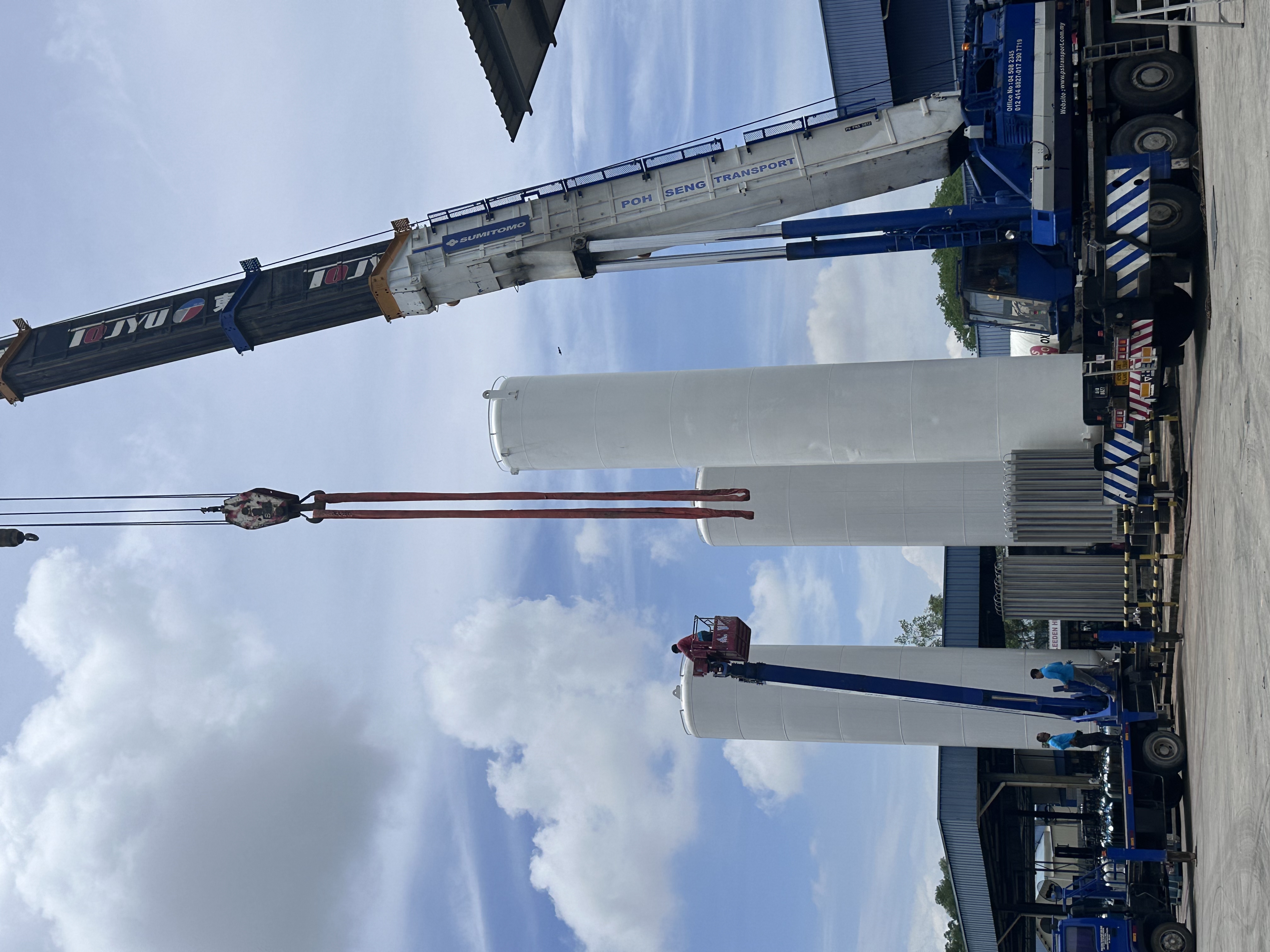
For over two decades, Hebei Runfeng Cryogenic Equipment Co., Ltd. (RFCC) has specialized in the R&D and manufacturing of cryogenic storage and transport equipment. We provide global customers with storage tanks for liquid oxygen (LO₂), liquid nitrogen (LN₂), liquid argon (LAr), LNG, and carbon dioxide, as well as vacuum-insulated cylinders, ambient air vaporizers, and related auxiliary facilities. We also offer comprehensive on-site services, including installation, commissioning, and training.
Our products utilize advanced high-vacuum multi-layer insulation technology, featuring low evaporation rates, superior thermal insulation performance, and high safety standards. They are widely used across the industrial gas, medical, chemical, metallurgical, energy, and environmental protection sectors.
Conclusion
With the advancement of industrial automation and green manufacturing, the demand for stable and efficient gas supply systems continues to grow. Thanks to advantages such as high storage capacity, efficient delivery, and low operating costs, liquid oxygen storage tanks are becoming a key choice for modern industrial oxygen supply.
RFCC remains committed to providing global customers with professional cryogenic storage and transport equipment as well as customized solutions, helping enterprises achieve safer and more efficient production operations.