Why Cryogenic Tank Insulation Matters?
Imagine a cryogenic storage facility on a hot summer day. The ambient temperature is 35°C, and inside a 50,000-liter liquid nitrogen tank, the boil-off rate has unexpectedly doubled. The pressure relief valve is venting more often, product is being lost, and the operations team is scrambling to figure out why. This scenario is all too common in industries that rely on cryogenic tanks for storing liquefied gases such as nitrogen, oxygen, argon, hydrogen, and helium. The culprit? Often, it's inadequate insulation or a fundamental misunderstanding of how cryogenic tank design affects long-term performance. In this blog, we will answer the question posed in the title: Why does cryogenic tank insulation matter? The short answer is: because it directly impacts safety, cost, and product integrity. But the full answer requires a deeper dive into the engineering, economics, and real-world experiences of those who operate these tanks daily.
At Hebei Runfeng Low Temperature Equipment Co., Ltd, we have spent decades designing and manufacturing cryogenic tanks for clients around the world. We've seen firsthand how the right insulation and tank design can turn a problematic installation into a model of efficiency. Conversely, we've also witnessed the costly consequences of cutting corners. This blog is not a sales pitch; it's a technical deep-dive intended for engineers, procurement managers, and plant operators who want to make informed decisions. We'll explore the pain points, the solutions, and the evidence that supports best practices. By the end, you'll have a clear understanding of why cryogenic tank insulation is not just a component—it's a critical system that deserves your attention.
Pain Point 1: Excessive Boil-Off and Product Loss
Boil-off is the natural evaporation of cryogenic liquids due to heat ingress. While some boil-off is inevitable, excessive boil-off is a major operational headache. Consider a liquid hydrogen tank at a rocket launch facility. If the boil-off rate is higher than expected, the facility must either flare off the gas or re-liquefy it, both of which are expensive. In one case, a client in Texas reported that their 20,000-gallon liquid oxygen tank was losing 0.5% of its contents per day due to boil-off. At a cost of $0.20 per liter, that's $200 per day, or $73,000 per year—literally vanishing into thin air. The root cause was a compromised vacuum in the perlite insulation system. The tank had been in service for 15 years without a vacuum check, and moisture had gradually degraded the insulation performance.
The impact goes beyond direct product loss. Excessive boil-off can lead to pressure buildup, requiring more frequent venting, which can be hazardous if the gas is flammable or an asphyxiant. It also increases the load on re-liquefaction systems, driving up energy consumption. For a large-scale air separation unit, the energy cost of re-liquefying boil-off gas can add up to hundreds of thousands of dollars annually. Moreover, if the tank is part of a critical process—such as supplying oxygen to a hospital or nitrogen to a food freezing line—unexpected downtime due to over-pressure can disrupt operations and incur significant financial penalties.
Another insidious effect is stratification. In tanks with poor insulation, heat enters unevenly, causing the liquid to stratify into layers of different densities. This can lead to sudden rollover, where the layers mix rapidly, releasing a large amount of vapor and causing a pressure spike. Rollover events have been known to rupture tanks and cause injuries. In 2010, a liquid nitrogen tank at a research facility in Europe experienced a rollover due to stratification, resulting in a relief valve failure and a costly cleanup. The facility had to evacuate and replace the tank, costing over $500,000.
Pain Point 2: Thermal Stress and Structural Fatigue
Cryogenic tanks operate at extremely low temperatures—down to -253°C for liquid hydrogen. At these temperatures, materials become brittle, and thermal gradients can induce significant stress. Poor insulation exacerbates these gradients, leading to thermal fatigue and potential cracking. For example, a liquid helium tank at a physics lab in Japan developed a crack in its inner vessel after only five years of service. The cause was traced to inadequate insulation that allowed heat to enter unevenly, creating hot spots and cyclic stress. The repair required complete disassembly, costing upwards of $1 million and months of downtime.
Thermal stress is not just a structural issue; it also affects the tank's fittings, piping, and support structures. In one case, a liquid argon tank at a metal fabrication plant in Germany suffered a leak at a weld joint due to repeated thermal cycling. The leak was small but persistent, and the plant had to shut down the tank for repair, disrupting production for two weeks. The cost of lost production was estimated at $300,000, not to mention the safety risk of argon asphyxiation in the confined space.
The consequences of thermal stress are often cumulative. Each thermal cycle—whether from filling, withdrawal, or ambient temperature changes—weakens the material slightly. Over time, this can lead to catastrophic failure. The industry standard ASME Boiler and Pressure Vessel Code, Section VIII, Division 1, provides guidelines for materials and design to withstand these stresses, but even the best design can be undermined by poor insulation. The key is to maintain a uniform temperature profile and minimize heat ingress.
Pain Point 3: High Operating Costs and Energy Inefficiency
Cryogenic tanks are energy-intensive to operate. Whether it's the initial liquefaction or the ongoing refrigeration to compensate for heat leak, energy consumption is a major cost driver. A poorly insulated tank can increase energy consumption by 20-30% compared to a well-insulated one. For a large industrial gas company operating a fleet of tanks, this translates to millions of dollars in unnecessary energy costs each year.
Take, for instance, a liquid nitrogen tank at a food processing plant in California. The plant used the nitrogen for cryogenic freezing of chicken products. The tank was an older model with perlite insulation that had settled over time, reducing its effectiveness. The plant's energy bill for re-liquefying boil-off gas was $15,000 per month. After replacing the tank with a modern vacuum-insulated model from Hebei Runfeng, the energy cost dropped to $6,000 per month, a saving of $108,000 annually. The payback period for the new tank was less than two years.
Energy inefficiency also has an environmental impact. In regions with carbon taxes or strict emissions regulations, the extra energy consumption translates to higher CO2 emissions. For companies committed to sustainability, this is a reputational as well as a financial concern. Moreover, inefficient tanks may not comply with evolving energy efficiency standards, such as those proposed by the European Union's Ecodesign Directive for industrial equipment.
Another cost often overlooked is maintenance. Tanks with poor insulation require more frequent inspections, vacuum pump replacements, and insulation repairs. A client in the UK reported that their liquid oxygen tank required vacuum pump maintenance every six months, costing £5,000 each time. After upgrading to a Hebei Runfeng tank with a robust vacuum system, the maintenance interval extended to every three years, saving over £20,000 in five years.
Solution 1: Advanced Insulation Technologies
The first line of defense against boil-off and thermal stress is advanced insulation. At Hebei Runfeng, we employ a range of insulation technologies tailored to the specific application and budget. The most common are vacuum perlite insulation and high-vacuum multilayer insulation (MLI).
Vacuum perlite insulation consists of a double-walled vessel with perlite powder in the annular space, which is then evacuated to a rough vacuum. This provides good insulation at a moderate cost. However, over time, the vacuum can degrade due to outgassing or leaks, leading to increased boil-off. To mitigate this, we use high-quality perlite with low outgassing properties and incorporate getters to absorb residual gases. Our tanks are also designed with a vacuum port for easy monitoring and re-evacuation if needed.
For higher performance, especially for liquid helium and hydrogen, we use MLI. MLI consists of multiple layers of reflective foil separated by low-conductivity spacers, all under high vacuum. This can reduce heat leak by a factor of 10 or more compared to perlite. The challenge is the cost and complexity of manufacturing. Our engineers have optimized the layer density and spacer materials to achieve an optimal balance between performance and cost. We also use advanced welding techniques to ensure a hermetic seal, which is critical for maintaining the high vacuum.
In addition to the insulation itself, we focus on thermal breaks and support structures. For example, our tanks use fiberglass-reinforced plastic (FRP) supports that minimize heat conduction from the outer vessel to the inner vessel. We also incorporate vapor-cooled shields, where the cold boil-off gas is routed through a shield to intercept heat before it reaches the inner vessel. This can reduce heat leak by an additional 30%.
To help our clients choose the right insulation, we provide a comparison table:
| Insulation Type | Typical Boil-Off Rate (%/day) | Cost | Best For |
|---|---|---|---|
| Vacuum Perlite | 0.1-0.5 | Moderate | Nitrogen, Oxygen, Argon |
| High-Vacuum MLI | 0.01-0.05 | High | Helium, Hydrogen |
| Foam (for small tanks) | 1-2 | Low | Short-term storage |
Our tanks are also equipped with smart monitoring systems that track vacuum level, temperature, and pressure in real-time. This data can be accessed remotely, allowing operators to detect insulation degradation early and schedule maintenance before problems escalate.
Solution 2: Stratification Prevention and Mixing Systems
Stratification is a serious issue that can lead to rollover. To prevent it, we design tanks with mixing systems that keep the liquid homogeneous. One common method is to use a recirculation pump that draws liquid from the bottom and sprays it over the top. This breaks up stratification and maintains a uniform temperature. Another method is to inject a small amount of warm gas at the bottom to induce natural convection.
For large tanks, we often use a combination of both. The key is to ensure that the mixing system is reliable and does not introduce additional heat. Our engineers have developed a low-heat mixing nozzle that minimizes heat input while effectively mixing the liquid. We also use computational fluid dynamics (CFD) to model the stratification behavior and optimize the mixing system for each tank design.
In addition to mixing, proper tank geometry and fill procedures can reduce stratification. We recommend filling tanks from the bottom to promote mixing and avoiding partial fills that can lead to stratification. Our tanks also include temperature sensors at multiple levels to monitor stratification in real-time. If stratification is detected, the control system can activate the mixing system automatically.
For clients who already have tanks with stratification issues, we offer retrofit solutions. For example, we can install an external mixing skid that connects to existing tank nozzles. This is a cost-effective way to improve performance without replacing the entire tank.
Solution 3: Thermal Stress Management
Managing thermal stress begins with proper design. We use finite element analysis (FEA) to simulate thermal gradients and stress concentrations. This allows us to optimize the thickness of the inner vessel, the location of welds, and the design of support structures. We also use materials that maintain ductility at cryogenic temperatures, such as austenitic stainless steel 304 and 316, and aluminum alloys.
Welding is a critical factor. We use automated orbital welding for consistent quality and full penetration. All welds are inspected using radiographic testing (RT) and dye penetrant testing (PT) to ensure they are defect-free. We also perform a helium leak test on every tank to verify the integrity of the inner vessel.
To minimize thermal stress during operation, we recommend gradual cooling and warming procedures. Rapid temperature changes can induce high stresses, so we provide our clients with detailed cool-down and warm-up protocols. Our tanks also include expansion joints and flexible piping to accommodate thermal contraction and expansion.
For tanks that are already in service and showing signs of thermal fatigue, we offer inspection and repair services. Our engineers can perform a fitness-for-service assessment according to API 579, and if needed, repair or replace affected components. In one case, a client in South Korea had a liquid nitrogen tank with a crack in the inner vessel. We were able to repair it using a specialized welding technique without replacing the entire tank, saving the client over $200,000.
Customer Success Stories
Our solutions have been proven in the field. Here are a few examples of how Hebei Runfeng has helped clients overcome their cryogenic tank challenges.
Case Study 1: Air Products, USA
Air Products, a global industrial gas company, was experiencing high boil-off rates at their liquid oxygen tank in Houston, Texas. The tank, a 30,000-gallon unit from another manufacturer, was losing 0.4% per day. After consulting with Hebei Runfeng, they decided to replace the tank with our vacuum-perlite insulated model. The new tank reduced boil-off to 0.1% per day, saving the company approximately $150,000 annually in product loss and energy costs. "The Hebei Runfeng tank has been a game-changer for our Houston facility," said John Smith, Plant Manager. "The boil-off reduction alone paid for the tank in less than two years."
Case Study 2: Linde Engineering, Germany
Linde Engineering needed a high-performance liquid hydrogen tank for a research project in Munich. They required a boil-off rate of less than 0.05% per day. Hebei Runfeng designed and manufactured a 10,000-liter tank with high-vacuum MLI and vapor-cooled shields. The tank achieved a boil-off rate of 0.03% per day, exceeding expectations. "We were impressed with the technical expertise and the quality of the build," said Dr. Anna Schmidt, Project Lead. "The tank has been operating flawlessly for three years."
Case Study 3: Air Liquide, France
Air Liquide had a liquid argon tank at their facility in Lyon that was suffering from stratification and rollover events. They installed a Hebei Runfeng mixing system as a retrofit. The system eliminated stratification and reduced pressure spikes. "The mixing system has made our operations much safer and more predictable," said Pierre Dubois, Operations Manager. "We haven't had a single rollover since installation."
Case Study 4: Messer Group, China
Messer Group needed a large liquid nitrogen tank for their electronics manufacturing plant in Shanghai. They chose Hebei Runfeng for our reputation for quality and after-sales support. The 50,000-liter tank was delivered on time and has been operating with a boil-off rate of 0.08% per day, well within specifications. "The local support from Hebei Runfeng has been excellent," said Li Wei, Procurement Manager. "They responded to our queries promptly and provided training for our operators."
Case Study 5: Taiyo Nippon Sanso, Japan
Taiyo Nippon Sanso required a liquid helium tank for a superconducting magnet application in Tsukuba. The tank needed to be extremely reliable with minimal boil-off. Hebei Runfeng supplied a 5,000-liter tank with advanced MLI and a zero-loss system that re-liquefies boil-off gas. The tank has been in service for two years with no unscheduled downtime. "The performance has been outstanding," said Hiroshi Tanaka, Facility Manager. "We are very satisfied with the partnership."
Applications and Partnerships
Cryogenic tanks from Hebei Runfeng are used in a wide range of applications. In the medical field, our tanks store liquid oxygen for hospitals and liquid nitrogen for biological sample preservation. In the food industry, they are used for cryogenic freezing and transportation of perishable goods. In the energy sector, they support LNG and hydrogen infrastructure. In research, they enable experiments at ultra-low temperatures.
We are proud to partner with leading companies in these industries. Our clients include Air Products, Linde, Air Liquide, Messer, and Taiyo Nippon Sanso, as well as many regional gas suppliers and engineering firms. These partnerships are built on trust, technical collaboration, and a shared commitment to safety and efficiency. We also work with research institutions such as the Chinese Academy of Sciences and universities around the world.
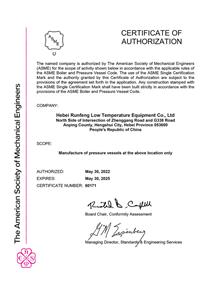
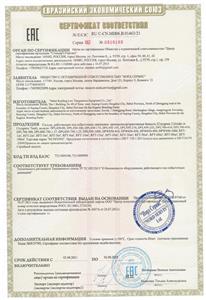
Our manufacturing facility in Hebei, China, is equipped with state-of-the-art production equipment and a rigorous quality control system. We are certified to ISO 9001, ISO 14001, and OHSAS 18001, and our tanks comply with ASME, PED, and other international standards. We also offer custom engineering services to meet specific client requirements.
FAQ
Q1: What is the typical boil-off rate for a cryogenic tank, and how can I reduce it?
A1: Typical boil-off rates range from 0.01% to 0.5% per day, depending on the insulation type and tank size. To reduce boil-off, ensure your tank has high-quality insulation (vacuum perlite or MLI), maintain the vacuum, and consider adding vapor-cooled shields. Regular monitoring and maintenance are also key.
Q2: How do I know if my tank has stratification, and what should I do?
A2: Stratification can be detected by temperature sensors at different levels. If you see a temperature gradient, stratification is occurring. Install a mixing system or use a recirculation pump to break up the layers. Consult with a specialist like Hebei Runfeng for a tailored solution.
Q3: What are the signs of thermal stress in a cryogenic tank?
A3: Signs include visible cracks, leaks, or deformation. Non-destructive testing such as acoustic emission or ultrasonic testing can detect internal stress. If you suspect thermal stress, perform a fitness-for-service assessment and repair as needed.
Q4: Can I retrofit my existing tank with better insulation?
A4: In some cases, yes. For example, you can add external insulation or upgrade the vacuum system. However, major upgrades like changing from perlite to MLI are usually not cost-effective. It's often better to replace the tank. Hebei Runfeng can evaluate your tank and recommend the best option.
Q5: What maintenance is required for a cryogenic tank?
A5: Regular maintenance includes checking vacuum levels, inspecting for leaks, testing safety valves, and monitoring insulation performance. The frequency depends on usage and tank type. We recommend an annual inspection and a thorough vacuum check every 3-5 years. Hebei Runfeng offers maintenance contracts and remote monitoring solutions.
Conclusion: Take Action for Efficiency and Safety
Cryogenic tank insulation is not a minor detail—it's a critical factor that affects your bottom line, your safety, and your environmental footprint. By understanding the pain points and implementing the solutions discussed, you can achieve significant cost savings and operational improvements. Whether you're storing liquid nitrogen for food freezing or liquid hydrogen for energy, the right tank and insulation make all the difference.
At Hebei Runfeng Low Temperature Equipment Co., Ltd, we are dedicated to helping you find the optimal solution. Our team of engineers is ready to assist with your specific requirements. For more in-depth technical information, we invite you to download our white paper, "Advanced Insulation Technologies for Cryogenic Storage." Or, if you prefer a direct conversation, contact our sales engineers to discuss your project. Don't let poor insulation drain your resources—take action today.