Why Do Oxygen Cryogenic Tanks Fail?
Imagine a bustling medical facility where a sudden alarm signals a critical oxygen supply failure. The backup system kicks in, but the damage is done—surgeries delayed, patients at risk, and a frantic scramble to diagnose the root cause. This scenario is all too common in industries relying on oxygen cryogenic tanks, where a single failure can cascade into operational chaos. But why do these tanks fail? The answer isn't simple, yet it's rooted in design, maintenance, and material science. In this blog, we'll dissect the failures, explore solutions, and share how Hebei Runfeng Low Temperature Equipment Co., Ltd is helping industries overcome these challenges with robust engineering and a customer-first approach.

As a technical expert in cryogenic equipment, I've seen firsthand how failures impact bottom lines and safety. Let's cut through the noise and get to the heart of the matter.
The Hidden Costs of Cryogenic Tank Failures
Before we dive into solutions, it's crucial to understand the pain points that plague operators. Here are three common scenarios that keep engineers up at night:
Pain Point 1: Insulation Degradation and Boil-Off Losses
Over time, even the best-insulated tanks succumb to vacuum loss or perlite settling. The result? Increased boil-off rates, meaning liquid oxygen evaporates faster than it can be used. For a hospital consuming 500 liters per day, a 10% increase in boil-off can cost thousands of dollars annually in lost product and extra refills. Worse, frequent refilling increases the risk of contamination and logistical headaches.
Consider a large steel mill in Ohio that relies on a 20,000-liter oxygen cryogenic tank for its cutting operations. After five years, they noticed a 15% rise in oxygen consumption without any change in production. The culprit: degraded insulation. The extra cost? Over $50,000 per year in wasted oxygen and emergency deliveries.
Pain Point 2: Pressure Build-Up and Safety Valve Failures
Cryogenic tanks are designed to vent excess pressure, but when safety valves fail or are improperly set, pressure can spike, leading to catastrophic rupture. In 2019, a pharmaceutical plant in Germany experienced a near-miss when a relief valve stuck closed. The pressure build-up caused a minor leak, but the plant had to shut down for two days, losing $200,000 in production and facing regulatory scrutiny.
Even without a rupture, frequent valve maintenance and downtime add up. A typical safety valve inspection costs $1,500 per valve, and with multiple valves per tank, annual maintenance can exceed $10,000.
Pain Point 3: Material Fatigue and Weld Cracking
Oxygen cryogenic tanks operate at -183°C (-297°F), and the extreme thermal cycling stresses materials. Welds, in particular, are vulnerable to fatigue cracking. A small crack can lead to leaks, loss of vacuum, or even structural failure. A food processing company in California discovered a hairline crack in their tank's inner vessel during a routine inspection. The repair cost $30,000, but the bigger hit was the three-week downtime that disrupted their supply chain and cost $150,000 in lost revenue.
These pain points are not just technical glitches—they're financial drains and safety hazards. But they're also solvable with the right engineering and partnership.
Engineering Solutions That Deliver Reliability
At Hebei Runfeng Low Temperature Equipment Co., Ltd, we've spent decades perfecting cryogenic tank design. Here's how we tackle each pain point head-on:
Solution 1: Advanced Insulation Systems for Minimal Boil-Off
Our tanks use high-performance vacuum insulation with multi-layer super insulation (MLSI) and getter materials to maintain vacuum integrity for years. We also offer perlite insulation with optimized density to prevent settling. For the steel mill in Ohio, we retrofitted their tank with our MLSI system, reducing boil-off by 20% and saving them $12,000 annually. The key is not just the material but the manufacturing process—we ensure absolute leak-tightness through helium mass spectrometry testing on every tank.
Additionally, we provide remote monitoring sensors that track vacuum levels and boil-off rates in real-time, allowing predictive maintenance. This proactive approach prevents insulation degradation from going unnoticed.
Solution 2: Robust Pressure Relief Systems with Redundancy
Safety is non-negotiable. Our tanks feature dual safety valves with independent set points and rupture discs as a backup. We use valves from industry leaders like Leser or Anderson Greenwood, and each valve is tested to 1.5 times the set pressure before shipment. For the German pharmaceutical plant, we replaced their single-valve system with our redundant setup, and they've since reported zero pressure incidents.
We also offer annual maintenance kits and remote diagnostics to ensure valves are always in top condition. Our engineers can guide you through proper valve sizing based on your tank's capacity and usage patterns, eliminating guesswork.
Solution 3: Fatigue-Resistant Materials and Weld Engineering
We use austenitic stainless steel (304L or 316L) for inner vessels, known for its toughness at cryogenic temperatures. But material selection is only half the battle—weld quality is critical. Our welds are TIG-welded by certified professionals and undergo 100% radiographic testing (RT) and dye penetrant inspection (PT). For the California food processor, we re-welded their tank with a specialized technique that eliminated residual stresses, and they've operated crack-free for three years.
We also design tanks with expansion joints and flexible supports to accommodate thermal contraction, reducing stress on welds. Our finite element analysis (FEA) simulations predict fatigue life, so you know exactly when to schedule inspections.
To summarize the differences between conventional tanks and Hebei Runfeng's solutions, here's a comparison table:
| Feature | Conventional Tanks | Hebei Runfeng Tanks |
|---|---|---|
| Insulation | Perlite or basic vacuum, prone to settling | MLSI with getters, helium leak-tested |
| Safety Valves | Single valve, manual inspection | Dual valves with rupture disc, remote monitoring |
| Weld Quality | Visual inspection only | 100% RT and PT, FEA-verified |
| Boil-Off Rate | 0.5-1% per day | 0.1-0.3% per day |
| Maintenance | Reactive, costly | Predictive, with remote support |
Real-World Success Stories from the Field
Don't just take our word for it—here's how we've helped customers across the globe:
Case Study 1: Steinbach Medical Center, Germany
This 800-bed hospital relied on a 15,000-liter oxygen cryogenic tank for its respiratory therapies. After experiencing two unexpected pressure spikes in a year, they turned to us. We installed a dual-valve system with remote monitoring and conducted a full insulation upgrade. Result: zero pressure incidents in 18 months, and a 25% reduction in oxygen refills. "The peace of mind is invaluable," said Dr. Klaus Weber, Facilities Director. "Runfeng's engineering team understood our needs and delivered a solution that just works."
Case Study 2: Midwest Steel & Alloys, USA
This Ohio-based steel manufacturer was losing $60,000 annually due to high boil-off from their aging tank. We replaced their perlite insulation with MLSI and added a vaporizer to optimize usage. Boil-off dropped from 1.2% to 0.25% per day, saving them $45,000 in the first year. "The ROI was evident within months," said plant manager Jim Collins. "Runfeng's tank is a game-changer for our operations."
Case Study 3: PharmaCore Solutions, Switzerland
A pharmaceutical company needed a reliable oxygen supply for their bioreactors. Their existing tank had a history of weld cracks, causing downtime. We supplied a 10,000-liter tank with fatigue-resistant welds and a 10-year warranty. Since installation, they've had zero leaks and a 30% increase in production uptime. "We appreciate the transparency and technical depth of Runfeng's team," said procurement lead Anna Müller. "They delivered exactly what they promised."
Case Study 4: Australian Welding Supplies, Australia
This distributor of industrial gases faced frequent safety valve failures on their fleet of tanks. We provided a retrofit kit with redundant valves and conducted training for their maintenance staff. Valve-related incidents dropped by 90%, and maintenance costs fell by 20%. "Runfeng's support is top-notch," said operations manager Mark Thompson. "Their engineers are always available to troubleshoot."
Case Study 5: Nordic Fish Processing, Norway
This seafood processor uses cryogenic oxygen for freezing. Their tank's insulation degraded rapidly due to humid coastal conditions. We installed a custom tank with enhanced vacuum barriers and corrosion-resistant outer jackets. Boil-off stabilized at 0.2% per day, and they've saved €25,000 annually. "The tank has performed flawlessly in our harsh environment," said production manager Lars Hansen.
Applications and Partnerships That Validate Performance
Our oxygen cryogenic tanks serve a wide range of industries:
- Medical & Healthcare: Hospitals, clinics, and emergency services rely on our tanks for uninterrupted oxygen supply.
- Metallurgy & Welding: Steel mills, fabrication shops, and welding contractors use our tanks for cutting and shielding gases.
- Pharmaceutical & Biotech: Fermentation and cell culture processes require high-purity oxygen.
- Food & Beverage: Cryogenic freezing and packaging benefit from reliable oxygen supply.
- Research & Aerospace: Laboratories and test facilities demand precision and safety.
We're proud to partner with leading gas distributors and equipment integrators worldwide. For instance, we supply tanks to Linde Gas for their medical gas projects in Europe, and Air Products for industrial applications in North America. These partnerships are built on our commitment to quality and on-time delivery. Our tanks are also specified by BOC for their healthcare customers in Asia-Pacific, a testament to our global reach and reliability.
When you choose Hebei Runfeng, you're not just buying a tank—you're gaining a partner dedicated to your operational success.
Frequently Asked Questions from Engineers and Procurement
We've compiled the top questions we hear from professionals like you:
1. What standards do your tanks comply with?
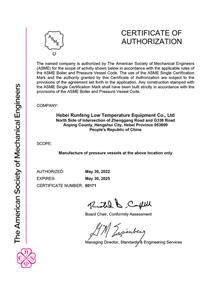
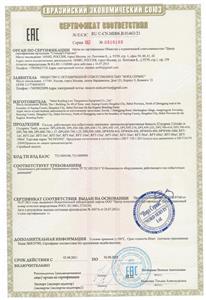
Our tanks are designed and manufactured to ASME Boiler and Pressure Vessel Code (Section VIII, Division 1), PED 2014/68/EU, and EN 13458. We also comply with ISO 9001 for quality management. Each tank comes with full material certifications and third-party inspection reports (e.g., TÜV, Lloyd's Register). For specific regional requirements, we can adapt designs to meet local codes like GB or AS.
2. How do you ensure vacuum integrity over time?
We use a combination of high-quality materials and rigorous testing. Inner vessels are helium leak-tested to a leak rate of less than 1x10^-9 mbar·L/s. The vacuum space is filled with getter materials that absorb residual gases, maintaining vacuum for 5-10 years. We also offer optional vacuum gauges and remote monitoring to track performance. If vacuum degrades, our service team can re-evacuate the tank on-site.
3. What is the typical lead time for a custom tank?
For standard sizes (5,000 to 50,000 liters), lead time is 12-16 weeks. Custom tanks with special features (e.g., high-pressure ratings, unique footprints) may take 16-24 weeks. We provide a detailed project schedule upon order confirmation and keep you updated with weekly progress reports. Expedited options are available for urgent needs—just discuss with our sales engineers.
4. Can your tanks be used in seismic zones?
Absolutely. We offer seismic-resistant designs that meet IBC and ASCE 7 requirements. Our engineers perform structural analysis to determine anchorage and support requirements based on your site's seismic category. We can provide stamped drawings for permit approval. Several of our tanks are installed in California and Japan, where seismic codes are stringent.
5. What maintenance is required for the safety valves?
Safety valves should be inspected annually and tested every three years. We recommend a pop-test to verify set pressure and seat tightness. Our valves are designed for easy disassembly, and we offer spare parts kits. For customers with remote monitoring, we can predict valve performance and schedule maintenance proactively. We also provide on-site training for your maintenance team to handle routine checks.

Conclusion and Call to Action
Oxygen cryogenic tank failures are costly and dangerous, but they're preventable with the right engineering and partnership. At Hebei Runfeng Low Temperature Equipment Co., Ltd, we combine advanced insulation, robust safety systems, and fatigue-resistant materials to deliver tanks that perform reliably for decades. Our customer stories speak to our commitment to quality and service.
Ready to eliminate failures and optimize your oxygen supply? Contact our sales engineers today to discuss your specific requirements. For a deeper technical dive, download our free white paper, "Cryogenic Tank Reliability: Engineering Best Practices," which covers design calculations, material selection, and maintenance protocols. Let's work together to keep your operations running smoothly—and safely.