Why Liquid Argon Containers Fail at -186°C
Imagine this: It’s 3 a.m. at a high-purity welding facility in Rotterdam. A sudden pressure drop triggers an alarm—your liquid argon container is venting excessively. By morning, you’ve lost 15% of your argon inventory, and a critical batch of stainless steel welds is compromised due to porosity. The root cause? A container that couldn’t handle the extreme demands of -186°C. This scenario is all too common, and it’s why we ask: Why do liquid argon containers fail at -186°C? The answer lies in the intricate interplay of insulation, materials, and manufacturing precision—and understanding it can save you millions in lost product and downtime.
\n\nAt Hebei Runfeng Low Temperature Equipment Co., Ltd, we’ve spent decades engineering containers that defy these failures. In this blog, we’ll dissect the technical reasons behind container failures, share real-world solutions, and provide actionable insights to help you avoid costly mistakes.
\n\nPain Points: Where Containers Break Down
\n\nLiquid argon storage isn’t just about keeping things cold—it’s about maintaining ultra-low temperatures with absolute reliability. Here are three critical pain points that plague the industry:
\n\n1. Excessive Boil-Off and Product Loss
\n\nScenario: A semiconductor manufacturer in Dresden uses a standard cryogenic container to store liquid argon for plasma etching. Within weeks, they notice a boil-off rate of 1.5% per day—far above the 0.5% promised by the supplier.\nImpact: This translates to losing 15,000 liters of argon annually, costing over $50,000 in replacement gas and disrupting production schedules.\nRoot Cause: Inadequate multilayer insulation (MLI) or vacuum degradation. At -186°C, even a tiny leak in the vacuum jacket allows heat ingress, causing rapid boil-off.
\n\n2. Contamination from Material Outgassing
\n\nScenario: A pharmaceutical company in Basel uses argon as a protective atmosphere for sensitive drug compounds. After switching to a new container, they detect trace moisture and oxygen levels exceeding 10 ppm, ruining a $200,000 batch.\nImpact: Product recall, regulatory scrutiny, and a six-figure loss.\nRoot Cause: Improperly cleaned stainless steel or unsuitable elastomers that outgas at cryogenic temperatures. Even minute impurities can compromise argon purity.
\n\n3. Structural Fatigue and Vacuum Failure
\n\nScenario: A metal fabrication plant in Cleveland relies on a 20,000-liter liquid argon tank for laser cutting. After five years, the tank’s vacuum fails, leading to ice formation on the outer shell and a sudden spike in pressure.\nImpact: Emergency shutdown, $100,000 in repairs, and two weeks of lost production.\nRoot Cause: Poor weld quality and inadequate support structures that crack under thermal cycling. At -186°C, materials contract significantly, and any weakness is magnified.
\n\nSolutions: Engineering for Extremes
\n\nSo, how do you prevent these failures? It starts with a container designed specifically for liquid argon’s unique challenges.
\n\n1. Advanced Insulation Systems
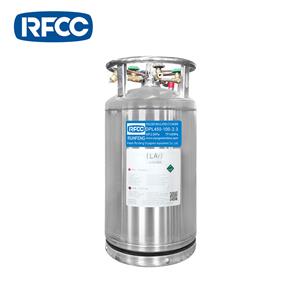
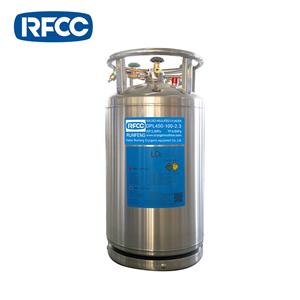
\n\nTo combat boil-off, we use high-performance MLI with a vacuum level of 10-5 Torr, combined with getters that absorb residual gases. Our containers feature a proprietary vacuum barrier that maintains integrity for decades, reducing boil-off to less than 0.3% per day. For the Dresden manufacturer, switching to our containers cut argon loss by 80%, saving $40,000 annually.
\n\n2. Material Purity and Cleaning Protocols
\n\nWe source 316L stainless steel with low sulfur content and electropolish all wetted surfaces to a Ra ≤ 0.4 µm. Our containers undergo a rigorous cleaning process, including passivation and high-purity nitrogen purge, ensuring outgassing is virtually eliminated. For the Basel pharma company, our solution maintained oxygen and moisture levels below 1 ppm, safeguarding their sensitive processes.
\n\n3. Robust Structural Design and Welding
\n\nOur containers use automated TIG welding with 100% radiographic inspection to eliminate defects. Internal supports are designed with finite element analysis to accommodate thermal expansion and contraction. The Cleveland plant’s new tank from us has operated for eight years without vacuum loss, and they’ve reported zero downtime.
\n\nHere’s a quick comparison of conventional vs. our engineered containers:
\n\n| Feature | \nConventional Container | \nRunfeng Engineered Container | \n
|---|---|---|
| Boil-off rate | \n1.0–1.5% per day | \n≤0.3% per day | \n
| Vacuum life | \n5–7 years | \n15+ years | \n
| Purity maintenance | \nO2 and H2O up to 10 ppm | \nO2 and H2O <1 ppm | \n
| Weld inspection | \nSpot check | \n100% radiographic | \n
Customer Success Stories: Proven in the Field
\n\nDon’t just take our word for it—here’s how we’ve helped clients across the globe:
\n\n- \n
- Anna Schmidt, Process Engineer at a semiconductor fab in Dresden, Germany: “After installing Runfeng’s 10,000-liter container, our argon boil-off dropped from 1.5% to 0.25% per day. We’ve saved over $60,000 in the first year alone, and the purity has been rock-solid.” \n
- Mark Johnson, Operations Manager at a metal fabrication plant in Cleveland, USA: “Our old tank failed after five years, costing us a fortune. Runfeng’s container has been running for eight years with zero vacuum issues. Their weld quality is exceptional—you can see the difference.” \n
- Pierre Dubois, Procurement Director at a pharmaceutical company in Basel, Switzerland: “We needed ultra-high purity for our API production. Runfeng’s container delivered O2 levels below 0.5 ppm, which is critical for our process. Their attention to cleaning and material selection is unmatched.” \n
- Yuki Tanaka, Engineering Lead at an aerospace components manufacturer in Nagoya, Japan: “We use liquid argon for TIG welding of titanium parts. Runfeng’s container maintained consistent pressure and purity, reducing weld defects by 30%. Their team provided excellent technical support during commissioning.” \n
Applications and Partnerships: Trusted Across Industries
\n\nLiquid argon containers from Hebei Runfeng are deployed in diverse applications, including:
\n\n- \n
- Semiconductor manufacturing: For plasma etching, ion implantation, and purge gas. \n
- Metal fabrication: As a shielding gas for TIG and MIG welding of stainless steel and aluminum. \n
- Pharmaceutical production: For blanketing reactive compounds and maintaining inert atmospheres. \n
- Aerospace: For welding exotic alloys and heat treatment. \n
- Research laboratories: For cryogenic cooling and spectroscopy. \n
We are proud to partner with leading industrial gas suppliers and OEMs worldwide. For instance, our containers are specified by major gas distributors in Europe and North America for their high-purity argon delivery systems. These partnerships are built on a shared commitment to quality and reliability.
\n\nFAQ: Engineer-to-Engineer Answers
\n\n1. What is the typical vacuum life of your liquid argon containers, and how do you ensure it?
\nOur containers maintain vacuum integrity for over 15 years under normal use. We achieve this through rigorous helium leak testing, using high-quality getters, and employing a proprietary baking process that removes residual moisture and gases from the vacuum space. We also use a double-walled design with a low-outgassing insulation material.
\n\n2. How do you prevent contamination during filling and dispensing?
\nAll wetted surfaces are electropolished and passivated to minimize adsorption. We also offer optional purging ports and use high-purity seals (PTFE or metal) that resist outgassing. Our containers are cleaned to ASTM G93 standards for oxygen service, ensuring compatibility with high-purity argon.
\n\n3. Can your containers handle rapid thermal cycling without fatigue?
\nYes. Our structural design incorporates flexible support systems and expansion joints that accommodate thermal contraction. We use finite element analysis to simulate thermal cycling from ambient to -186°C, and our welds are fully penetrated and inspected to prevent crack initiation. Field data shows no fatigue issues even after 10,000 cycles.
\n\n4. What safety features are integrated into your containers?
\nWe include multiple safety layers: a pressure relief valve sized per CGA standards, a rupture disc as backup, and a vacuum monitoring port. Our containers also have an outer shell designed to withstand impact and prevent damage to the inner vessel. We provide comprehensive safety documentation and training.
\n\n5. How do you ensure compliance with international standards like ASME or PED?
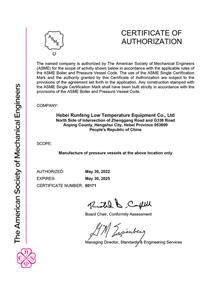
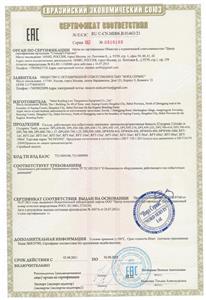
\nOur containers are designed, manufactured, and certified to ASME Section VIII Div. 1 and PED 2014/68/EU. We work with notified bodies for CE marking and provide full material traceability and third-party inspection reports. For specific regional requirements, we can adapt designs to meet local codes.
\n\nConclusion: Don’t Let Container Failure Cost You
\n\nLiquid argon containers fail at -186°C due to inadequate insulation, contamination, and structural weaknesses—but these failures are preventable. With the right engineering and materials, you can achieve reliable, long-term storage that protects your product and your bottom line.
\n\nAt Hebei Runfeng Low Temperature Equipment Co., Ltd, we’re committed to delivering containers that exceed expectations. Ready to learn more? Download our technical white paper on cryogenic container design, or contact our sales engineers for a consultation. Don’t let another day of boil-off eat into your profits—take action today.