Why Liquid Argon Storage Challenges Your Plant?
Imagine a fabrication plant in the heart of Germany's semiconductor corridor. The night shift is in full swing, and a sudden pressure spike in the liquid argon storage tank triggers an alarm. The entire production line halts, and millions of euros in wafers are at risk. This isn't a scene from a sci-fi movie; it's a reality that many plant managers face when their liquid argon storage systems aren't up to the task. So, why does liquid argon storage challenge your plant? The answer lies in the delicate balance of cryogenic engineering, operational precision, and safety protocols. In this blog, we'll dive deep into the technical hurdles and how advanced solutions from companies like Hebei Runfeng Low Temperature Equipment Co.,Ltd are revolutionizing the way industries handle this critical cryogen.
Understanding Liquid Argon Storage
Liquid argon, with its boiling point of -185.9°C (-302.6°F), is a cornerstone of high-purity applications ranging from metal fabrication to semiconductor manufacturing. Storing it efficiently requires more than just a tank; it demands a system that maintains ultra-low temperatures, prevents contamination, and ensures safety. But even with modern technology, plants encounter persistent pain points that can cripple operations. Let's explore three of the most pressing issues.
Pain Point 1: Boil-Off Losses and Economic Drain
Boil-off is the inevitable evaporation of liquid argon due to heat ingress. In a poorly insulated tank, losses can reach 0.5% per day. For a facility consuming 10,000 liters daily, that's 50 liters lost—costing upwards of $150 daily, or nearly $55,000 annually. But the financial hit is just the tip of the iceberg. Frequent refills disrupt logistics, and the escaping gas can create hazardous atmospheres in confined spaces. One plant in Texas reported that boil-off losses accounted for 15% of their argon budget, forcing them to scale back production during peak demand.
Pain Point 2: Purity Degradation and Product Rejection
Argon purity is paramount in industries like electronics, where even parts-per-billion impurities can ruin a batch. Storage tanks with inadequate sealing or improper purging can introduce moisture, oxygen, or nitrogen. A semiconductor manufacturer in Taiwan faced a crisis when their liquid argon storage system allowed oxygen ingress, leading to oxidation defects in 20% of their chips. The result was a $2 million loss and a tarnished reputation. Maintaining 99.9999% purity requires not only high-quality tanks but also rigorous monitoring and maintenance.
Pain Point 3: Safety Risks and Regulatory Compliance
Liquid argon is an asphyxiant, and its rapid expansion ratio (1:847) means even small leaks can displace oxygen in a room. In 2019, a facility in South Korea experienced a leak that led to oxygen levels dropping below 15%, triggering an evacuation and a costly OSHA investigation. Beyond the immediate danger, non-compliance with standards like NFPA 55 and ISO 21029 can result in fines and shutdowns. The challenge is designing a storage system that not only meets but exceeds these safety benchmarks.
Solutions: Engineering Excellence in Liquid Argon Storage
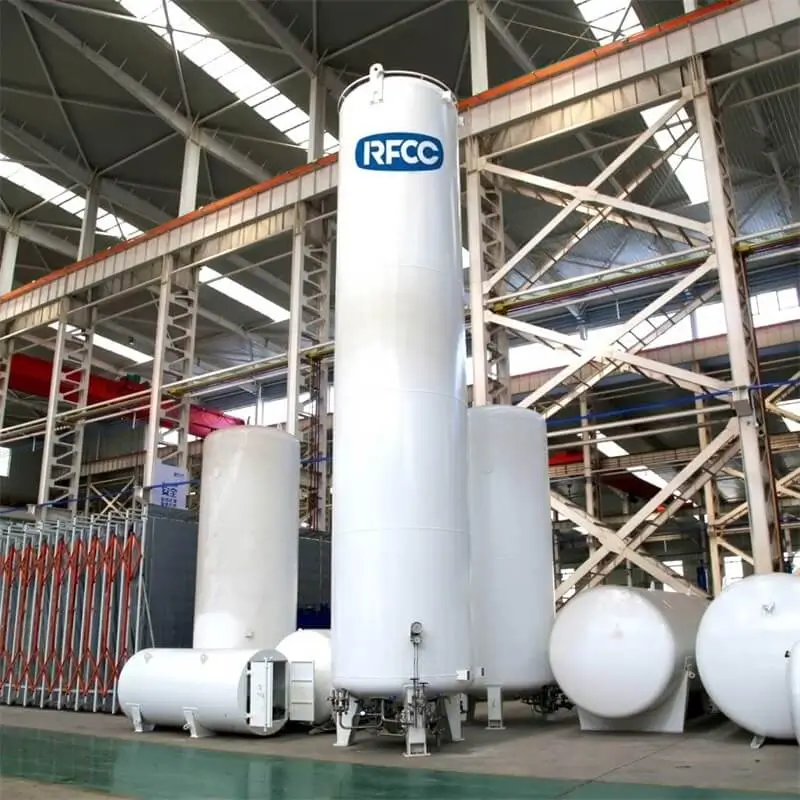
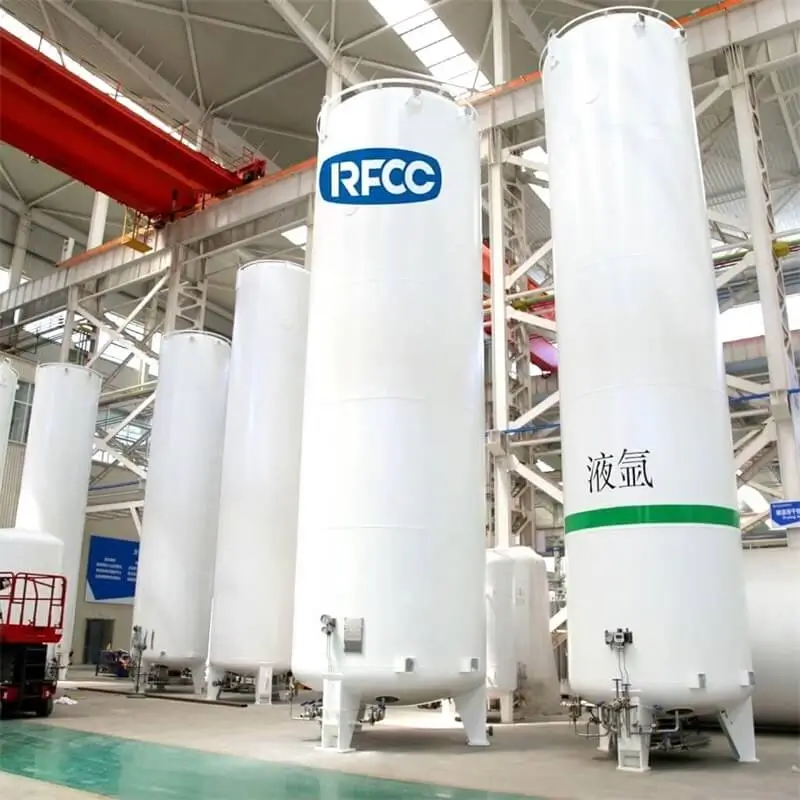
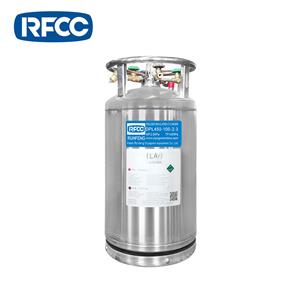
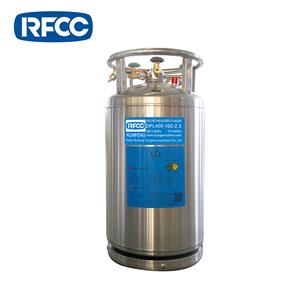
Addressing these pain points requires a multi-faceted approach. First, for boil-off losses, advanced vacuum-insulated tanks with multilayer insulation (MLI) can reduce daily losses to less than 0.1%. For example, Hebei Runfeng's tanks utilize a proprietary insulation design that minimizes heat transfer, cutting losses by up to 80% compared to conventional models. Additionally, vapor recovery systems can capture boil-off gas and re-liquefy it, turning a waste stream into a resource.
Second, purity degradation is tackled through rigorous material selection and clean welding techniques. Tanks should be constructed from stainless steel with low carbon content to prevent carbide precipitation, and all internal surfaces must be passivated. Hebei Runfeng employs orbital welding and helium leak testing to ensure hermetic seals, maintaining purity levels above 99.9999%. Real-time monitoring with analyzers for oxygen and moisture provides early warnings, allowing operators to take corrective action before impurities spike.
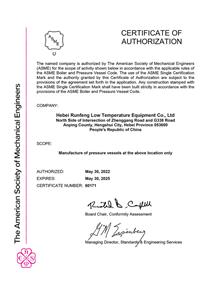
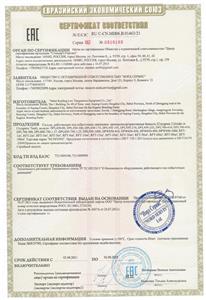
Third, safety is enhanced through redundant pressure relief systems, gas detection sensors, and emergency shutdown protocols. Hebei Runfeng integrates IoT-enabled sensors that continuously monitor pressure, temperature, and oxygen levels, transmitting data to a central control room. This proactive approach not only prevents accidents but also ensures compliance with international standards. For instance, their tanks are designed to meet ASME Boiler and Pressure Vessel Code and PED 2014/68/EU, giving plant managers peace of mind.
Customer Success Stories
Let's look at how these solutions have transformed operations for real clients. In Stuttgart, Germany, a precision welding company was struggling with argon losses that cost them €30,000 annually. After installing Hebei Runfeng's vacuum-insulated tanks with vapor recovery, their losses dropped to €3,000 per year. "The system paid for itself in 14 months," said Klaus Meier, Operations Manager. "We've also seen a 10% increase in welding quality due to consistent purity."
In Portland, Oregon, a semiconductor fab faced repeated purity issues that caused a 12% yield loss. They switched to Hebei Runfeng's tanks with advanced monitoring. Within three months, yield improved by 8%, and purity-related defects vanished. "The real-time alerts saved us from a major batch rejection last month," remarked Sarah Chen, Process Engineer. "It's like having an extra set of eyes on our argon supply."
In Osaka, Japan, a metal heat treatment plant was cited for safety violations after an argon leak. They partnered with Hebei Runfeng to overhaul their storage system. The new setup included oxygen sensors and automatic ventilation. "We passed the audit with flying colors," said Hiroshi Tanaka, Safety Director. "The system's reliability has also reduced our insurance premiums by 15%."
In São Paulo, Brazil, a research laboratory needed ultra-high purity argon for laser experiments. Hebei Runfeng customized a small-scale tank with electro-polished internals. "We achieved 99.9999% purity consistently," said Dr. Ana Silva. "Our experiments are now more reproducible, and we've published three papers thanks to this stability."
Applications and Partnerships
Liquid argon storage is critical across diverse sectors. In the aerospace industry, it's used for inerting fuel tanks and welding titanium components. In food processing, it enables cryogenic freezing and modified atmosphere packaging. Hebei Runfeng has supplied tanks to major players like Air Liquide and Linde, who integrate them into their gas supply networks. Their partnership with a European automotive manufacturer led to a 20% reduction in argon consumption for laser welding lines. These collaborations underscore the trust that industry leaders place in Hebei Runfeng's technology.
FAQ: Technical Insights for Engineers and Procurement Managers
Q1: What is the typical boil-off rate for a liquid argon tank, and how can it be minimized?
A1: Boil-off rates vary from 0.05% to 0.5% per day, depending on insulation and tank size. To minimize, choose tanks with vacuum insulation and MLI, and consider vapor recovery systems. Hebei Runfeng's tanks achieve rates as low as 0.05%.
Q2: How do you ensure purity during transfer from tank to point of use?
A2: Use a closed-loop transfer system with flexible vacuum-jacketed lines. Purge lines with dry nitrogen before transfer, and install filters to trap particulates. Regular maintenance of valves and seals is crucial.
Q3: What safety standards should a liquid argon storage system comply with?
A3: Key standards include NFPA 55, ISO 21029, and local codes. Ensure tanks have pressure relief valves, gas detectors, and emergency shutdown. Hebei Runfeng's systems meet ASME and PED requirements.
Q4: Can liquid argon tanks be installed outdoors in cold climates?
A4: Yes, but they must be designed for low ambient temperatures. Insulation and materials should withstand thermal cycling. Hebei Runfeng offers arctic-grade tanks tested to -40°C.
Q5: What is the lifespan of a quality liquid argon tank?
A5: With proper maintenance, a high-quality tank can last 20-30 years. Regular inspections and vacuum testing are essential. Hebei Runfeng provides a 10-year warranty on vacuum integrity.
Conclusion: Elevate Your Liquid Argon Storage
The challenges of liquid argon storage—boil-off, purity, and safety—are not insurmountable. With the right technology and partner, you can turn these pain points into strengths. Hebei Runfeng Low Temperature Equipment Co.,Ltd has a proven track record of delivering innovative solutions that enhance efficiency, quality, and safety. Whether you're in semiconductors, aerospace, or metal fabrication, investing in advanced storage systems is a strategic move. For a deeper dive, download our technical white paper on cryogenic storage best practices, or contact our sales engineers to discuss a customized solution. Don't let storage challenges hold your plant back—take control today.