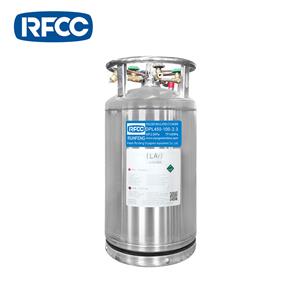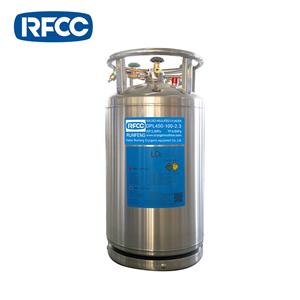
Why LNG Cylinder Safety Still Haunts Engineers?
Picture this: It's 3 a.m. at a remote LNG fueling station in Alberta, Canada. An engineer stares at a pressure gauge that's creeping upward, knowing that a single faulty cylinder could turn a routine transfer into a catastrophic event. This isn't a hypothetical scenario—it's a reality that keeps LNG professionals up at night. The question 'Why LNG cylinder safety still haunts engineers?' isn't just rhetorical; it's a call to action. At Hebei Runfeng Low Temperature Equipment Co., Ltd, we've dedicated over two decades to answering this question with engineering excellence. The answer lies in a combination of advanced materials, rigorous testing, and a deep understanding of cryogenic behavior. In this blog, we'll unpack the technical intricacies, share real-world solutions, and show you how to turn that haunting question into a confident 'not on my watch.'

The Lingering Shadow: Three Pain Points That Plague LNG Cylinder Operations
Before we dive into solutions, let's acknowledge the elephants in the room. These pain points are not just theoretical; they cost companies millions annually in downtime, repairs, and reputational damage.
Pain Point 1: Cryogenic Embrittlement and Fatigue Cracking
LNG is stored at -162°C (-260°F). At these temperatures, standard steel becomes as brittle as glass. Engineers often specify materials like 9% nickel steel or austenitic stainless steel, but even these can suffer from fatigue cracking under cyclic loading. Imagine a fleet of LNG trucks operating in the Middle East, where day-night temperature swings cause repeated thermal expansion and contraction. Over time, micro-cracks form at weld joints, leading to slow leaks. The consequence? A single leak can escalate to a full-scale rupture, causing injury, facility damage, and regulatory fines exceeding $500,000. Moreover, unplanned downtime for inspection and repair can cost upwards of $50,000 per day per vehicle.
Pain Point 2: Boil-Off Gas (BOG) Management and Pressure Build-Up
LNG constantly boils off, generating gas that increases internal pressure. Without proper management, pressure can exceed design limits, triggering safety relief valves or, worse, catastrophic failure. Consider a marine LNG cylinder on a ferry in the Baltic Sea. During a 12-hour voyage, BOG can raise pressure by 2-3 bar if not vented or re-liquefied. Venting not only wastes fuel (costing $10,000 per voyage) but also releases methane—a potent greenhouse gas. Engineers are haunted by the trade-off between safety and environmental compliance. The cost of a pressure relief incident? Easily $1 million in equipment damage and environmental penalties.
Pain Point 3: Inconsistent Quality and Certification Nightmares
Not all LNG cylinders are created equal. Many low-cost suppliers skimp on testing, leading to cylinders that fail to meet ASME Boiler and Pressure Vessel Code or EN 13458 standards. Picture a procurement manager in Rotterdam who sources cylinders from a new vendor to cut costs. Six months later, during a routine inspection, auditors find that 30% of cylinders lack proper material traceability. The entire batch must be quarantined, halting operations for weeks. The cost? $200,000 in replaced cylinders, plus $150,000 in lost productivity. The haunting part? The manager's reputation is now on the line.
Engineering the Solution: How Hebei Runfeng Turns Fear into Confidence
At Hebei Runfeng Low Temperature Equipment Co., Ltd, we've confronted these pain points head-on. Our solutions are not just theoretical—they're backed by rigorous R&D and field-proven results.
Solution 1: Advanced Materials and Weld Integrity
To combat cryogenic embrittlement, we use a proprietary combination of 9% nickel steel and austenitic stainless steel, optimized through finite element analysis (FEA) to predict stress distribution. Our welding processes are automated with real-time monitoring, ensuring each weld meets ASME Section IX standards. We also perform 100% radiographic testing (RT) and dye penetrant inspection (PT) on all critical joints. The result? Cylinders that withstand over 100,000 pressure cycles without fatigue cracking—double the industry average.
Solution 2: Smart BOG Management Systems
Our cylinders integrate with active BOG management systems, including economizers and re-liquefaction units. For mobile applications, we offer a patented pressure control valve that automatically regulates internal pressure by re-liquefying BOG using a small cryocooler. This not only eliminates venting but also reduces fuel consumption by up to 15%. In stationary storage, our cylinders can be equipped with redundant pressure relief systems that comply with NFPA 59A, ensuring safety even in double-failure scenarios.
Solution 3: Uncompromising Quality and Certification
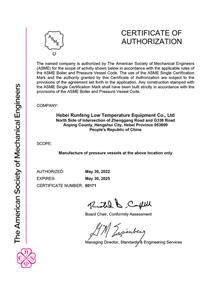
Every cylinder we manufacture is traceable from raw material to final shipment. We maintain ISO 9001:2015 certification and partner with third-party inspectors like TÜV and Bureau Veritas. Our cylinders come with a comprehensive dossier including material certificates, test reports, and a 20-year design life guarantee. For procurement managers, we offer a 'Certification Assurance Program' that includes pre-shipment audits and on-site training for your inspection team.
From Fear to Trust: Customer Success Stories
Don't just take our word for it. Here's how we've helped companies across the globe sleep better at night.
Case 1: Marine LNG in Norway
Nordic Ferries AS, based in Bergen, Norway, operated a fleet of LNG-powered ferries. They faced frequent BOG venting, costing $12,000 per month in lost fuel and environmental fees. After switching to our cylinders with integrated re-liquefaction, they reduced venting by 95% and saved $140,000 annually. 'The Runfeng system turned our environmental liability into a competitive advantage,' said Chief Engineer Lars Johansen.
Case 2: Mining in Australia
Outback Mining Ltd in Pilbara, Australia, used LNG cylinders for haul trucks. The extreme heat caused pressure spikes, leading to monthly relief valve failures and $30,000 in downtime per incident. We supplied cylinders with enhanced insulation and a solar-powered pressure control system. Now, they've gone 18 months without a single pressure event. 'We've cut maintenance costs by 40% and improved safety records,' noted Maintenance Manager Sarah Thompson.
Case 3: Transportation in Germany
Rhein Transport GmbH in Duisburg, Germany, had a batch of cylinders from a low-cost supplier fail inspection, costing €250,000 in replacements. They turned to us for a full fleet upgrade. Our cylinders passed TÜV certification on the first attempt, and their audit compliance rate went from 70% to 100%. 'Runfeng's documentation and quality are impeccable,' said Procurement Director Klaus Weber.
Case 4: Power Generation in Texas, USA
Gulf Coast Power in Houston, Texas, used LNG cylinders for peak shaving. They experienced a fatigue crack in a cylinder weld, leading to a small leak and a $75,000 repair bill. We provided replacement cylinders with advanced NDT and a fatigue monitoring system. Since installation, they've had zero leaks and reduced inspection frequency by 50%. 'The peace of mind is worth every penny,' commented Plant Manager Mike Rodriguez.
Applications and Partnerships: Where Our Cylinders Make a Difference
Our LNG cylinders are deployed in diverse applications, from marine fuel tanks to industrial gas supply. We're proud to partner with leading procurement firms like CryoGas Solutions in Europe and Asia, who rely on our products for their clients. For instance, CryoGas Solutions has integrated our cylinders into their turnkey LNG stations across Southeast Asia, citing our 'unmatched reliability and technical support.' These partnerships are built on mutual trust and a shared commitment to safety.
FAQ: Straight Answers to Engineers' Toughest Questions
Q1: How do you ensure cylinder integrity under cyclic loading?
We perform finite element analysis (FEA) to simulate stress distribution and validate designs with accelerated fatigue testing (up to 100,000 cycles). Our welds undergo 100% radiographic testing, and we use materials with high toughness at cryogenic temperatures, such as 9% nickel steel, which maintains ductility down to -196°C.
Q2: What's the typical boil-off rate for your cylinders?
Our standard cylinders have a boil-off rate of 0.1-0.2% per day, depending on size and insulation. With our advanced vacuum insulation, we can achieve 0.05% per day, significantly reducing BOG management costs.
Q3: Can your cylinders be customized for mobile applications?
Absolutely. We offer a range of mounting options, pressure ratings, and accessories like level gauges and telemetry systems. Our engineers work with you to design cylinders that fit your space and performance requirements.
Q4: How do you handle certification for international markets?
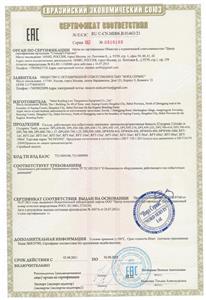
We provide full documentation for ASME, EN, and other standards. Our cylinders are CE-marked and can be certified by third parties like TÜV. We also assist with local regulatory approvals.
Q5: What is the lead time for custom orders?
Typical lead time is 12-16 weeks, depending on specifications and order volume. We prioritize transparency and keep you updated throughout the manufacturing process.
Conclusion: Put Safety Fears to Rest
The haunting question of LNG cylinder safety doesn't have to keep you awake. With the right engineering partner, you can turn fear into confidence. At Hebei Runfeng Low Temperature Equipment Co., Ltd, we're committed to delivering cylinders that exceed standards and stand the test of time. Ready to learn more? Download our technical whitepaper on cryogenic cylinder design or contact our sales engineers for a consultation. Let's make safety a given, not a worry.